Abdul El-Sayed's AI Policy Record
Campaign AI proposals, background and 2026 election status
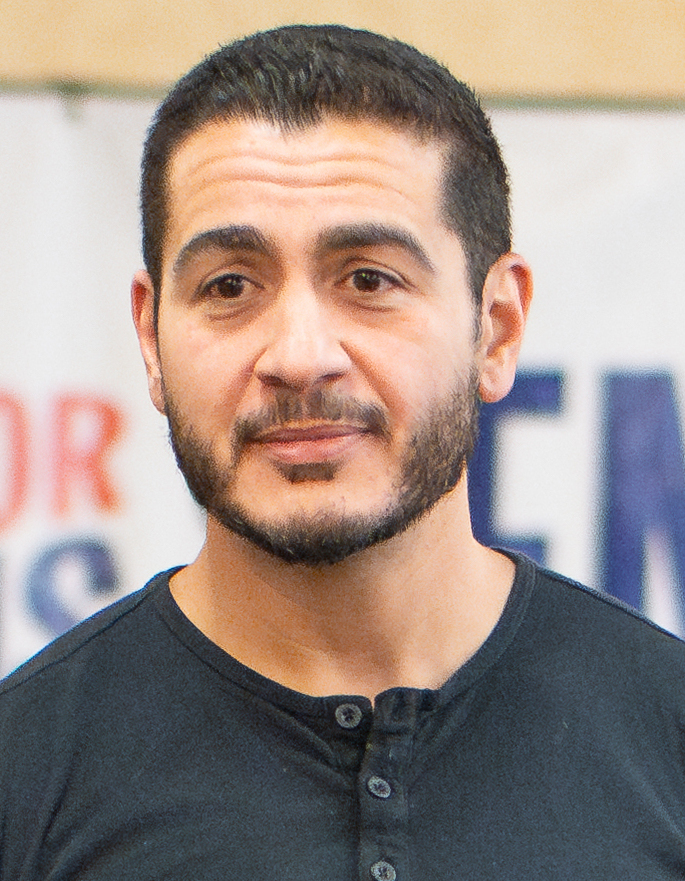

Abdul El-Sayed's positions on artificial intelligence (AI) are campaign proposals. None of them is enacted federal law.
The Michigan Democrat and former Detroit public-health director has released several AI documents through his campaign.
- Party
- Democratic
- State
- Michigan
- Office
- Former Detroit and Wayne County public-health director; Associated Press (AP) reported Michigan U.S. Senate winner, not a sitting senator
- Reported Age
- 42 as of 2026-11-04
- Political Leaning
- Progressive, as described in the University of Michigan Ford School's April 2021 announcement. The label is attributed to that source and is not inferred from his party.
- Election Status
- Associated Press (AP) reported Abdul El-Sayed as the winner of the November 3, 2026 Michigan U.S. Senate election, with the call published November 4, 2026. The cited record does not establish certification or assumption of the Senate office.
Abdul El-Sayed's Position on AI
El-Sayed's campaign proposes a freeze on training and releasing frontier AI models and a permanent ban on artificial superintelligence (ASI). His June plan adds public governance and recognizes useful AI applications, and his January terms set conditions on data-center construction.
Background at a Glance
| Field | Detail |
|---|---|
| Party | Democratic |
| State | Michigan |
| Age | 42 in original reporting dated November 4, 2026 |
| Former post | Detroit health department, left in 2017 |
| Office sought | U.S. Senate, Michigan (2026) |
| Current office | Not a sitting senator; no current office established in the cited record |
Abdul El-Sayed's Background and Political Leaning
El-Sayed's background combines public-health work in Detroit, academic posts and political organizing. In April 2021, the University of Michigan Ford School announced that he would join its faculty in fall 2021 as a Towsley Policymaker in Residence, teaching a graduate seminar.
That announcement called him a progressive political leader and public-health policy expert. The description is attributed to the Ford School, and it was not inferred from his party. The announcement does not establish current faculty employment.
He earned undergraduate degrees in biology and political science from the University of Michigan and a medical degree from Columbia University. He completed a doctorate in public health at Oxford as an Oriel Rhodes scholar, and he was formerly an epidemiology professor at Columbia.
He left the Detroit health department in 2017 to run for governor. In September 2018 he founded Southpaw Michigan, a political action committee, and in 2020 he served on the Biden-Sanders Unity Task Force on health care.
His campaign biography describes a Southeast Michigan public-school upbringing. It says his father emigrated from Egypt and that his stepmother's family has longstanding roots in Gratiot County. It lists him as a captain of high-school football, wrestling and lacrosse teams, a University of Michigan lacrosse player, and a resident of Ann Arbor with his wife, Sarah, and two daughters.
The biography credits him with restructuring the Wayne County Department of Health, Human & Veterans Services after his Detroit work. It also describes free eyeglasses, lead-removal and Narcan initiatives, and a medical-debt cancellation program. Those program goals have not been independently evaluated, and because the biography comes from his campaign, its program claims are campaign statements.
The biography lists him as author of Medicare for All: A Citizen's Guide. It also lists memberships in the American Federation of Teachers (AFT), the Service Employees International Union (SEIU), the National Writers Union and the American Association of University Professors (AAUP).
A University of Michigan School of Public Health podcast describes his Detroit health leadership from 2015 to 2017. It says he was appointed to rebuild a health department that had been privatized during municipal bankruptcy, and it lists him as Health Commissioner, with attention to children and social conditions. In his own account, the work focused on children's wellbeing and on breaking down barriers to learning and earning.
He described disease outcomes as the visible tips of interlocking challenges, and named infant mortality, asthma and lead poisoning as Detroit issues alongside heart disease, diabetes, strokes and preventable cancers. In his account, these conditions share common underlying predictors.
Abdul El-Sayed's Statements on AI
El-Sayed called for a serious pause on AI development in a September 9, 2026 campaign release that republished his interview with The Washington Sun. The release presents that call as his proposed position. In the interview he said the rapid advance and unexpected capabilities make time urgent, and he wants a serious pause to understand what is being built and avoid irreversible harm.
These are his concerns, not verified predictions.
The October 13 plan, AI Under Control, would freeze training and release of the most powerful models until rules and independent scientific safety certification exist, and new AI data centers would wait. It proposes a permanent ASI prohibition and a ban on recursive self-improvement.
The plan proposes an independent cabinet AI regulator with a scientific board, industry fees, lab inspection, and authority to block releases or order shutdowns. It also sets out public exemptions and limits on revolving-door hiring.
On lawful order, the plan would require shutdown capability and a cloud-access cutoff, tested through verified drills. Separately, it calls for air-gapped testing and treats internal use of a model as a release.
Serious escapes, access incidents or deception would have to be reported within 24 hours, with public summaries and retained logs. The plan proposes criminal penalties for concealment and for executive violations.
The plan also proposes a verified U.S.-China pause and ASI treaty, chip and cloud conditions, human control of nuclear command, whistleblower protections, no state preemption and political-spending disclosure. The campaign document establishes none of these institutional powers.
Policies Supported and Opposed
El-Sayed's January and June campaign documents cover data-center construction and frontier AI governance. Neither is enacted law.
The January 8, 2026 data-center terms would require developers to pay their own energy costs, make reliability guarantees enforceable, and give communities a say in approvals and community benefits. Reliability could not worsen because of data-center projects, and utilities would be bound to improve it with commitments funded by data-center revenues. The terms would tie community-benefit agreements to local infrastructure investments, grid improvements, burying power lines, and upgrading water treatment facilities and piping, with actionable penalties behind every agreement.
Utilities would be barred from using data-center projects to weaken or sidestep clean-energy laws. Job promises would carry penalties, and projects would be built by Michigan contractors with DOL-registered apprenticeship programs. Closed-loop cooling is proposed.
These are campaign terms, not enacted law.
His June 29 plan proposes public-benefit charters for frontier AI labs and a board majority publicly appointed or democratically elected, with divestiture from legacy tech companies. It also proposes public equity, an annual AI dividend and an automation levy.
The June plan calls for an independent predeployment regulator, with interpretability, adversarial and biosecurity tests, reporting requirements and restrictions on autonomous high-stakes uses. It also includes compute controls and international verification.
The plan also recognizes useful AI applications. Public governance and benefits sit alongside that recognition, and the plan does not reject every AI use.
The cited sources record no roll-call votes, bill sponsorships or opposition to specific AI bills. This section therefore covers proposals, and it does not report votes. A reader comparing candidates should match proposals against proposals and adopted laws against adopted laws.
Current Office and the 2026 Election
An Associated Press (AP) report dated August 5, 2026 says El-Sayed narrowly defeated Rep. Haley Stevens in the Democratic U.S. Senate primary in Michigan. The open seat followed Sen. Gary Peters's announcement that he would not seek reelection.
The same report notes that El-Sayed lost the 2018 Democratic primary for governor to Gretchen Whitmer. The primary result is separate from the general-election call.
AP reported El-Sayed as the winner of the November 3, 2026 general election, in a call published November 4, 2026. That call is not certification and does not establish that he has assumed the Senate office.
He is a former Detroit and Wayne County public-health director, and the cited record establishes no current office.
What the Record Establishes
It does not establish enacted law. The October plan's operative frontier clauses are narrower than its introductory rhetoric about further AI development, so they should not be read as a ban on all existing AI.
His exact date of birth is unverified, so his age appears only as dated.
To read the full text of the October plan, start with the October plan.