Bernie Sanders's Record on AI
Advanced-model restrictions and a public ownership proposal in Senate bills
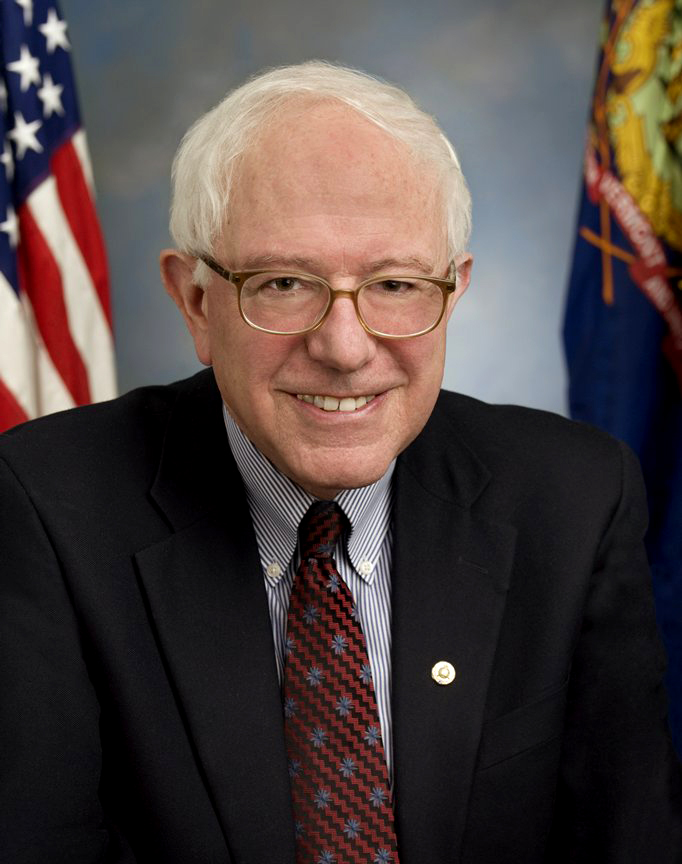

Formal sponsorship of three 2026 Senate bills points to restrictions on advanced artificial intelligence (AI) models and covered data centers, alongside a public ownership proposal. None of the three is recorded as enacted; each is referred to committee.
- Party
- Independent
- State
- Vermont
- Office
- U.S. Senator from Vermont
- Age
- 85 as of 2026-11-04 · Source
- Political Leaning
- Democratic socialist, in Sanders's own words in a 2024 interview; party affiliation is Independent.
- Election Status
- Not on the 2026 regular Senate ballot in the inspected record; his fourth Senate term began after his 2024 reelection.
Bernie Sanders's Position on AI
Bernie Sanders sponsors Senate bills that would impose a conditional pause on advanced AI, ban superintelligence and halt construction and upgrades at covered AI data centers. A separate sponsored proposal would make AI benefits broadly shared through public ownership and democratic oversight. None of these bills has become law.
These positions do not establish opposition to every AI use. The bills target advanced models, superintelligence and covered AI data centers, and the public ownership proposal seeks to spread AI benefits.
The record also contains criticism of AI companies. In prepared remarks, Sanders urged AI-company leaders to stop financing super political action committees (super PACs) that target candidates seeking AI guardrails. The inspected record contains no recorded individual vote by Sanders on these bills, and sponsorship does not supply one.
Background at a Glance
Sanders was 85 years old on November 4, 2026, calculated from his September 8, 1941 birth date in the Congressional Directory.
| Item | Detail | Source |
|---|---|---|
| Born | Brooklyn, New York, September 8, 1941 | Congressional Directory |
| Party | Independent | Official biography |
| Political leaning | Democratic socialist, in Sanders's own words (separate from party affiliation) | Interview republished by his office |
| Current office | U.S. Senator from Vermont, serving since 2007 | Official biography |
| Current district | None; U.S. Senate seat | Official biography |
| Office sought in 2026 | None in the inspected record | Official biography |
Background and Political Leaning
Sanders was born in Brooklyn, New York. His official biography says he attended James Madison High School, Brooklyn College and the University of Chicago, graduated in 1964 and then moved to Vermont. The Congressional Directory also lists an undergraduate degree from the University of Chicago in 1964.
The Congressional Directory lists carpenter, writer and college professor as earlier careers, without dates for those roles. The official biography records his service as Burlington mayor from 1981 to 1989, in the U.S. House from 1991 to 2007, and in the U.S. Senate since 2007.
His political leaning rests on his own description. In a July 18, 2024 interview with Bhaskar Sunkara of The Nation, republished by his Senate office, he identified as a democratic socialist. That label is separate from his Independent party affiliation.
Statements and Actions on AI
An individual statement in the record is a speech published as prepared remarks on September 15, 2026. In it, Sanders said, "we need binding international safety rules, not voluntary standards from the industry." He called for an advanced-AI pause and a permanent superintelligence ban, and he set those measures apart from voluntary company promises.
The same speech urged AI-company leaders to stop financing super PACs that target candidates seeking AI guardrails. It called for public participation in AI decisions and opposed letting AI companies control those decisions alone. Eight days later, on September 23, 2026, Sanders sponsored S.5493, the superintelligence bill.
On June 18, 2026, Sanders announced a proposal to make AI benefits broadly shared through public ownership and democratic oversight. He said the goal was to "make sure that AI benefits humanity, not just the richest people on the planet." The announcement states an objective and does not show that the proposal would deliver its projected benefits.
Policies Supported and Opposed
All three AI bills below list Sanders as a sponsor, which is a formal record of introduction. The latest recorded action on each is referral to committee, and none is recorded as enacted.
S.5493 sets an advanced-AI threshold of training compute of 10^25 integer or floating-point operations, adjusted annually, as printed in the official introduced bill PDF.
The bill would create a cabinet Department of Artificial Intelligence and pause advanced-AI training, modification, fine-tuning and unreleased deployment until that department is staffed and safety rules are issued. Limited remedial work is excepted. It would also prohibit developing, deploying, possessing, funding, importing or transferring superintelligence.
Advanced models would need predeployment approval under the bill. Developers would report discoveries within 24 hours and pause and isolate dangerous systems, possibly rendering them inoperative. Specified reckless violations could carry up to 20 years in prison.
A whistleblower provision lets the Secretary waive a 10-year AI-industry employment bar for a non-policymaking individual who submitted information about a violation of Section 8, 9 or 12 to the Secretary, when the waiver is consistent with the department's protective purpose. The waiver is discretionary, and it does not guarantee immunity from every penalty.
S.4214 has a separate trigger. Covered data centers include facilities used for AI models at scale, and an alternative branch covers facilities above 20 megawatts with high-density racks of at least 20 kilowatts or with liquid or immersion cooling. The bill does not automatically cover every server facility.
Construction and upgrades would halt upon enactment. The pause would end only after laws set product review, worker and benefit-sharing protections, utility and environmental protections, community approval, no subsidies and union labor standards. Those laws would also need to expressly terminate the pause, and the bill sets no fixed one-year expiry.
S.4214 would also require quarterly public Energy Department reports on data-center financing, water, power and emissions, and it would restrict computing-infrastructure exports and transfers for covered AI uses to entities in countries without comparable safeguards.
S.4825 remains a formal proposal. The record does not show enacted public ownership or any guaranteed dividend.
The two House roll calls below do not list Sanders, who is a senator, and that absence is not a vote. Senate passage of the TAKE IT DOWN Act came by unanimous consent, which is not a recorded individual vote. The AI for Main Street Act would have small business development centers help businesses evaluate and use AI, and its House text authorizes no additional funding.
The TAKE IT DOWN Act is a narrow harmful-use law. It covers knowing publication of nonconsensual intimate depictions, including specified digital forgeries made with AI, and covered platforms must remove covered depictions within 48 hours of a valid request. It is not a ban on AI or on synthetic media.
| Date | Bill | Status in the record | Sanders's role | Core provisions |
|---|---|---|---|---|
| March 25, 2026 | S.4214, Artificial Intelligence Data Center Moratorium Act | Referred to Commerce, Science, and Transportation; no enactment recorded | Sponsor | Halts construction and upgrades at covered AI data centers; pause ends only after listed laws |
| June 18, 2026 | S.4825, American A.I. Sovereign Wealth Fund Act | Referred to Finance; no law entry recorded | Sponsor | Public ownership and democratic oversight of AI benefits; no guaranteed dividend |
| September 23, 2026 | S.5493, Ban Artificial Superintelligence Act of 2026 | Read twice and referred to Commerce, Science, and Transportation; no enactment recorded | Sponsor | Conditional pause on advanced-AI training and deployment; superintelligence ban |
| January 20, 2026 | H.R. 5764, AI for Main Street Act | House passed 395 to 14 (roll call); received in Senate January 26 and referred to Small Business and Entrepreneurship | Not listed; senator with no House vote row | Small business development centers help businesses use AI; no additional funding authorized |
| April 28, 2025 | S. 146, TAKE IT DOWN Act | House passed 409 to 2 (roll call); became Public Law 119-12 on May 19, 2025 | Not listed; Senate passage by unanimous consent | Covers knowing publication of nonconsensual intimate depictions, including specified AI forgeries; 48-hour removal after a valid request |
Current Office and the 2026 Election
The inspected record does not show Sanders on the 2026 regular Senate ballot. His fourth Senate term began after his 2024 reelection, which his official biography verifies. The term runs six years.
Scope and Open Questions
The inspected text defines covered systems by training compute for advanced AI and by superintelligence characteristics. S.4214 defines covered data centers by scale, power density or cooling.
The conditions on the pauses matter. The S.4214 pause ends only after the listed laws are enacted, while the S.5493 pause lasts until the new department is staffed and safety rules are issued. The public ownership proposal in S.4825 is a separate bill from both pauses and the data-center rules.
The S.5493 and S.4214 restrictions sit alongside the S.4825 proposal to share AI benefits publicly, and none of the three bills is recorded as enacted.
Frequently Asked Questions
Has any of Bernie Sanders's AI legislation become law?
None of the three AI bills he sponsored in 2026 is recorded as enacted. Its latest action on S.5493 was referral to the Committee on Commerce, Science, and Transportation.
Did Bernie Sanders vote on the TAKE IT DOWN Act?
He has no recorded individual vote on the TAKE IT DOWN Act. Because he is a senator, the House roll call has no row for him. Senate passage in February 2025 came by unanimous consent, which is not a recorded individual vote.
Does Bernie Sanders oppose all artificial intelligence?
No source in the record supports that claim. His sponsored bills target advanced models, superintelligence and covered AI data centers, and his June 2026 proposal seeks broader sharing of AI benefits through public ownership.
A missing vote or statement is not evidence of opposition, so the record does not establish a position on every AI use.