Daniel Goldman's Record on AI
Formal support for one restriction on artificial intelligence (AI) data centers, plus House votes on two other AI bills
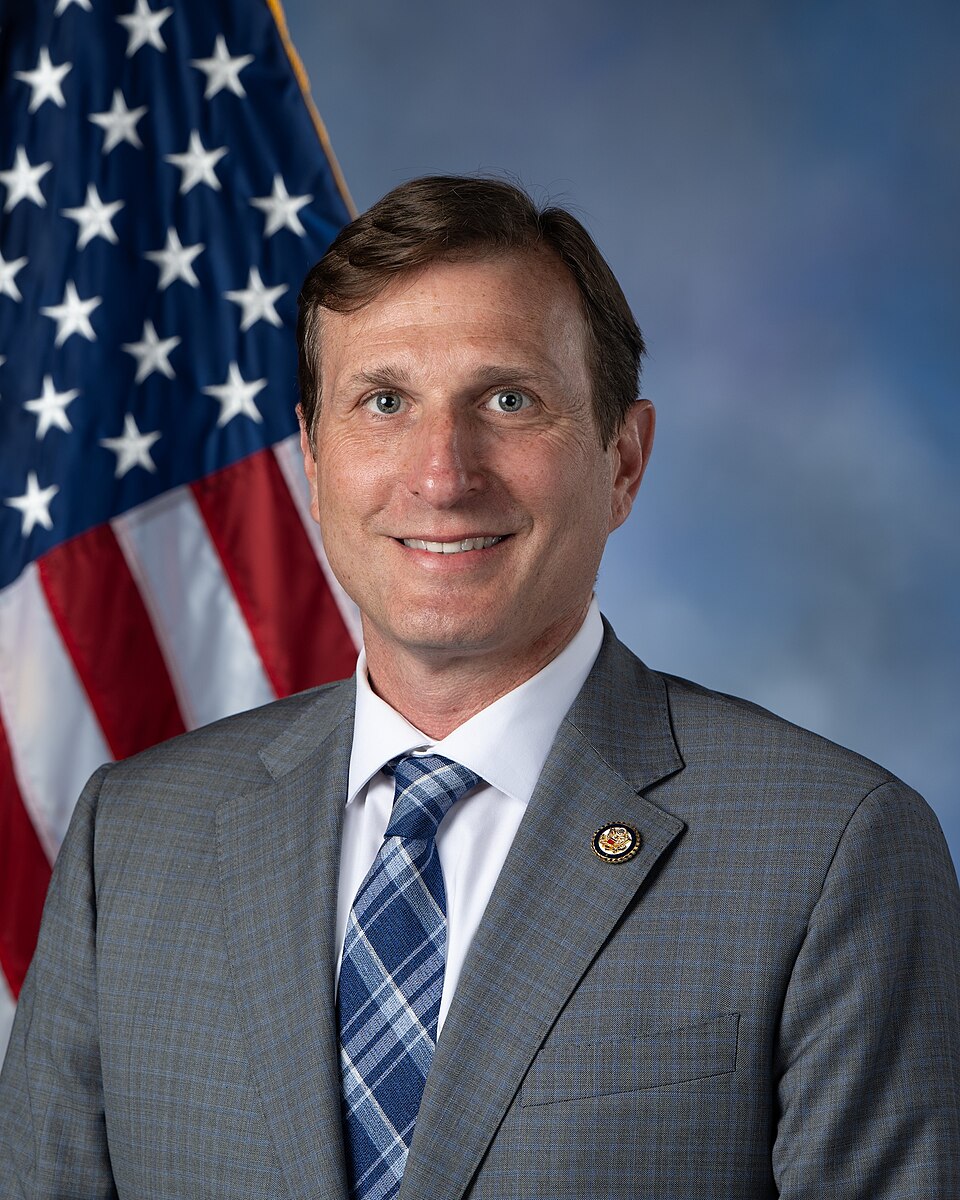

Daniel Goldman formally supports a moratorium on construction and upgrades of covered AI data centers. He is a cosponsor of House bill H.R. 9442, and the record also shows House votes for two other AI measures.
Those votes cover a small-business AI assistance bill and a federal law on nonconsensual intimate depictions, including AI-made forgeries. The record does not show Goldman opposing AI in general.
- Party
- Democratic
- State
- New York
- Office
- U.S. Representative, New York's 10th congressional district (NY-10)
- Age
- 50 as of 2026-11-05 · Source
- Political Leaning
- Congressional Progressive Caucus member (roster checked November 5, 2026).
Daniel Goldman's Position on AI
Goldman supports a pause on construction and upgrades of covered AI data centers through his cosponsorship of H.R. 9442, the Artificial Intelligence Data Center Moratorium Act. GovInfo lists him as an original cosponsor, and the cosponsorship is dated June 24, 2026.
That is a formal legislative act. It is not a spoken statement or a roll-call vote, and the bill has not been enacted.
The rest of the record is mixed. He voted yea on the AI for Main Street Act, which would require small business development centers to help businesses evaluate and use AI.
He also cosponsored the Workforce of the Future Act, a training proposal for students and workers. Together these items describe a restriction on certain AI infrastructure alongside support for AI use and training. The record does not establish opposition to all AI.
Background at a Glance
Goldman is a Democrat who represents New York's 10th congressional district (NY-10) in the U.S. House of Representatives, according to the Congressional Directory.
| Item | Detail | Source |
|---|---|---|
| Full name | Daniel Goldman | Congressional Directory |
| Date of birth | February 26, 1976 | Congressional Directory |
| Age on November 4, 2026 | 50, calculated from the birth date | Calculated from the Congressional Directory |
| Party | Democratic | Congressional Directory |
| State and district | New York, 10th district (NY-10) | Congressional Directory |
| Current office | U.S. Representative, NY-10 | Congressional Directory; official biography |
Background and Political Leaning
Goldman was born in Washington, D.C., on February 26, 1976, according to the Congressional Directory. He earned a bachelor's degree in history from Yale University in 1998 and a Juris Doctor (J.D.) with distinction from Stanford University in 2005. The official biography gives the same Yale and Stanford years.
The directory lists these roles: journalist, legal analyst, law clerk for the U.S. District Court for the Northern District of California and for the U.S. Court of Appeals for the Second Circuit. The official biography names judicial clerkships with Charles Breyer and Robert Sack.
The directory dates his service as an assistant U.S. attorney in the Southern District of New York from 2007 through 2017. The official biography describes him as a former federal prosecutor there for 10 years and as lead counsel for the first Trump impeachment, and it attributes that account to the office itself.
The directory also lists a 2019 staff role with Representative Adam Schiff and a 2019 to 2020 staff role with the House Permanent Select Committee on Intelligence.
His positions appear through specific bills, votes and letters.
Statements and Actions on AI
Goldman's documented AI activity in this record includes joint letters, a press release and bill cosponsorships rather than solo statements.
On April 16, 2026, Goldman co-led an inquiry with Velázquez and Wyden into the Immigration and Customs Enforcement (ICE) use of Palantir-developed technologies (release). The inquiry covered the Department of Homeland Security (DHS) and asked for contracts, databases, datasets, and privacy and retention safeguards. The release documents the request, but it does not independently establish the harms it describes.
On November 5, 2025, García's office listed Goldman among the cosigners of a House letter led by García and Nadler to the chief executive officer (CEO) of Delta about AI use in ticket pricing. Goldman is one name on a joint request, and the letter alone does not establish wrongdoing by Delta.
The letter is not a ban on all airline pricing algorithms.
On December 11, 2025, Representative LaMonica McIver's office named Goldman as a cosponsor of the Workforce of the Future Act. The McIver release describes a proposal that prepares students and workers for an AI-changing economy. It does not prohibit all AI development.
Policies Supported and Opposed
Goldman's supported restriction is H.R. 9442. The two House votes in the record are both yeas, and the record does not show him opposing any AI bill.
H.R. 9442 covers facilities used for AI models at scale. An alternative branch covers facilities over 20 megawatts (MW) with high-density rack power of at least 20 kilowatts (kW) or liquid or immersion cooling, and it does not automatically cover every server facility.
The pause would begin on enactment. It would end only after laws set product review, worker and benefit-sharing protections, utility and environmental protections, community approval, no subsidies, and union labor standards, and then expressly terminate the pause.
The bill sets no fixed one-year expiry. It requires quarterly Department of Energy reports on financing, water, power, emissions, jobs, subsidies and other listed topics, with inspections and subpoenas for verification. It also restricts computing-infrastructure exports, reexports and in-country transfers for covered AI uses to entities in countries without comparable safeguards.
Status separates the proposed from the enacted. Only the TAKE IT DOWN Act is law in this record, as Public Law 119-12. The AI for Main Street Act passed the House, and H.R. 9442, H.R. 6621 and H.R. 4640 are introduced and referred, so House passage and cosponsorship are not enactment.
The Senate passed S. 146 on February 13, 2025 by unanimous consent. Senate passage was by unanimous consent, not a recorded individual roll call.
The TAKE IT DOWN Act restricts one harmful use. It does not ban AI or synthetic media.
The AI for Main Street Act and the Workforce of the Future Act are business-assistance and training proposals. Goldman's yea vote supports the whole Main Street bill, and it does not show a broader AI philosophy.
| Date | Measure | Goldman's recorded role | Status in the record | Operative scope |
|---|---|---|---|---|
| 2025-04-28 | TAKE IT DOWN Act (Senate bill S. 146) | Yea on House passage, Clerk roll call 104 | Passed House 409 to 2; became Public Law 119-12 on May 19, 2025 | Addresses knowing publication of nonconsensual intimate depictions, including specified digital forgeries made with AI or other software, subject to the law's conditions and exceptions. Covered platforms must remove covered depictions within 48 hours of a valid request. |
| 2025-12-11 | Workforce of the Future Act (H.R. 6621) | Cosponsor | Introduced and referred to Education and Workforce and Science, Space, and Technology; no enactment | Prepares students and workers for an AI-changing economy, according to the McIver office release |
| 2025-12-16 | Stop AI Price Gouging and Wage Fixing Act of 2025 (H.R. 4640) | Cosponsor as of this date | Referred July 23, 2025 to Energy and Commerce, Judiciary, and Education and Workforce; no passage recorded | Introduced and referred; no passage or enactment in inspected record |
| 2026-01-20 | AI for Main Street Act (H.R. 5764) | Yea on House suspension vote, Clerk roll call 33 | Passed House 395 to 14; received in Senate January 26, 2026 and referred to Small Business and Entrepreneurship; no law entry | Small business development centers help businesses evaluate and use AI through information, guidance, training and outreach; authorizes no additional funding |
| 2026-06-24 | Artificial Intelligence Data Center Moratorium Act (H.R. 9442) | Original cosponsor | Introduced and referred to Energy and Commerce and Foreign Affairs; no enactment | Halts construction or upgrading of covered AI data centers on enactment until laws establish the listed protections and expressly end the pause |
Current Office and the 2026 Election
Axios reports that he lost the June 23, 2026 Democratic primary to Brad Lander.
Scope and Open Questions
The record establishes specific bill roles, votes and oversight actions. It does not establish a complete AI record, and it does not establish opposition to AI in general.
The record covers five federal bills, two House votes on bills, and two joint oversight letters.
The one supported restriction is not law. The one enacted measure is the TAKE IT DOWN Act, which Goldman voted for in the House.
A yea vote on a bill does not prove support for every use of AI. The supportive items on training and small business assistance sit beside the restriction and do not cancel it.
To check the current status, open the H.R. 9442 text on Congress.gov and its GovInfo bill status record. For his House roll-call entries, use the Clerk's pages for roll call 104 and roll call 33.
Frequently Asked Questions
Does Daniel Goldman support restrictions on AI?
Yes, in a formal sense. He cosponsored H.R. 9442, the Artificial Intelligence Data Center Moratorium Act, which would halt construction or upgrading of covered AI data centers upon enactment.
The bill is not law, and cosponsorship is not a roll-call vote or a spoken statement.
How did Daniel Goldman vote on AI bills?
He voted yea on the TAKE IT DOWN Act on April 28, 2025. That bill passed the House 409 to 2 and became Public Law 119-12 on May 19, 2025.
He also voted yea on the AI for Main Street Act on January 20, 2026. That bill passed the House 395 to 14, was received in the Senate, and has no law entry.
Does Daniel Goldman oppose all artificial intelligence?
The record does not establish that. He backs a pause on covered AI data centers, voted yea on two House AI measures, and cosponsored a training proposal.