Greg Casar Supports Artificial Intelligence Restrictions
A Texas lawmaker's background and legislative record, checked November 4, 2026.
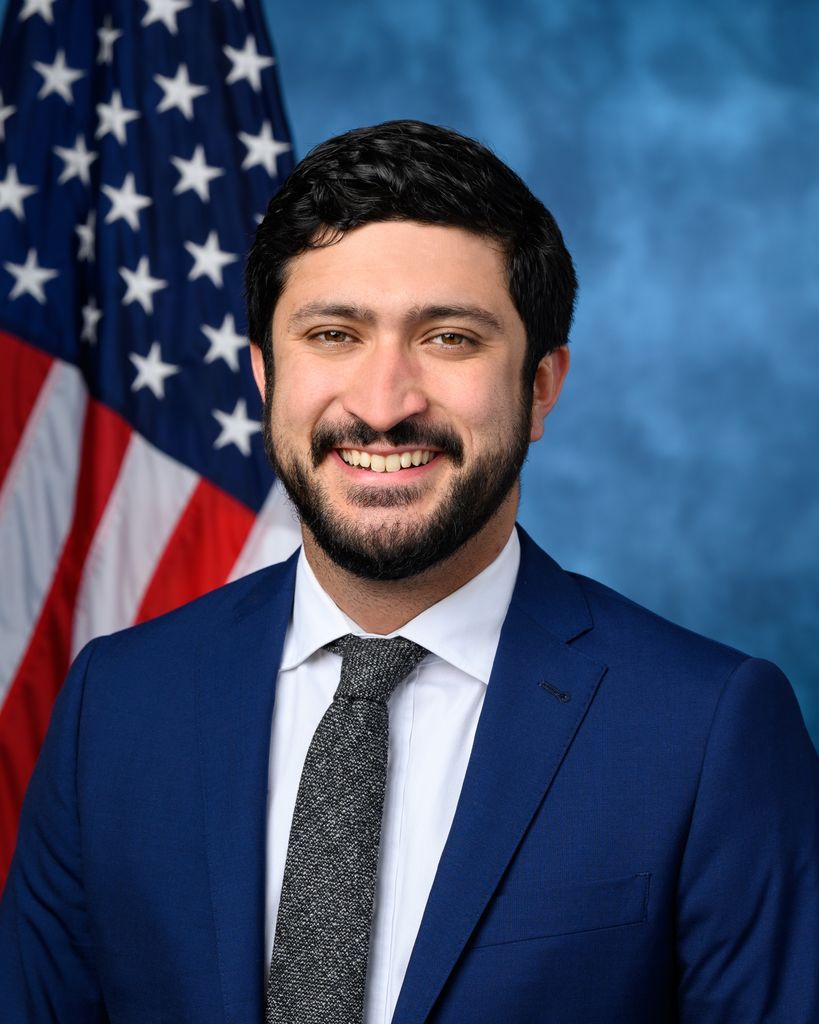

Greg Casar supports a proposed superintelligence ban and a separate data-center moratorium, and neither bill has been enacted. Casar sponsors H.R. 10538, a proposed ban on artificial intelligence (AI) superintelligence. He cosponsors H.R. 9442, a separate proposed moratorium on constructing and upgrading covered AI data centers.
Casar is a Democrat. He holds the U.S. House seat for Texas District 35 in the 119th Congress. His 2026 race for Texas District 37 has unofficial election-night returns that have not been certified.
- Party
- Democratic
- State
- Texas
- Office
- U.S. representative, Texas District 35
- Age
- 37 as of 2026-11-04 · Source
- Political Leaning
- Progressive; chair of the Congressional Progressive Caucus, according to his official biography.
- Election Status
- Unofficial Texas District 37 returns show Casar leading, checked November 4, 2026. Certification and the new term are separate.
Greg Casar's Position on AI
Greg Casar sponsors a proposed superintelligence ban and a pause on advanced AI training, and he cosponsors a separate moratorium on AI data-center construction. Neither bill has been enacted.
H.R. 10538 would govern AI models by their training compute and by their capabilities.
He is the sponsor of H.R. 10538. He is a cosponsor of H.R. 9442, and the record shows he joined it on September 17, 2026, after its introduction on June 24, 2026.
Sponsoring and cosponsoring are documented legislative support. Neither role gives one member the power to enact a bill alone.
A bill generally must pass both chambers and complete the constitutional enactment process. The House's explainer on the legislative process describes that path.
Casar's own statement of intent is a joint press release with Sanders dated September 23, 2026. It came one day before the official House introduction of H.R. 10538 on September 24, 2026.
Background and Political Career
Greg Casar was born in Houston, Harris County, Texas, on May 4, 1989. He was 37 as of November 4, 2026. The House history biography records his birth date.
His education and early career are recorded as follows. He graduated from Strake Jesuit College Preparatory in 2007 and earned a bachelor of arts (B.A.) from the University of Virginia in 2011.
He served on the Austin City Council from 2015 to 2022. His House service began on January 3, 2023. For the 119th Congress, his committees are Education and Workforce and Oversight and Government Reform.
He is the son of Mexican immigrants and a labor organizer, according to his official biography. Listed priorities include wages, immigrant rights, abortion, voting rights, veterans, seniors and climate. It also cites City Council advocacy on renter protections, affordable housing and paid sick leave.
The official biography identifies him as chair of the Congressional Progressive Caucus. The label alone does not establish his position on any individual policy.
Individual Statements and Oversight
Greg Casar's artificial intelligence (AI) statement in the inspected record accompanies his proposal to tax large AI businesses. In his office's August 2026 release, he says, "we will not let AI billionaires get rich by putting you out of work." The release is dated August 7, 2026, while the House introduction is recorded on August 6. The job-loss projection in that speech is Casar's concern, not an independently established outcome.
On August 10, 2026, Casar and Representative Doris Matsui co-led requests to OpenAI and Anthropic. The OpenAI request and the Anthropic request asked for incident logs, answers about alleged security incidents, and information about safeguards. These releases document the oversight action. They do not establish that the alleged incidents occurred as described.
On October 29, 2026, Casar and Representative Waters led a Congressional Progressive Caucus (CPC) release announcing a Democratic resolution against an AI bubble bailout for big tech. Casar said, "Federal help should go to workers and retirees."
On April 16, 2026, a release from Representative Daniel Goldman named Casar as a signatory to an inquiry into ICE use of Palantir-developed technologies for surveillance. That is formal participation in joint oversight. The release does not attribute an individual quote to Casar, and it does not find unlawful surveillance.
On November 5, 2025, a release from Representative Jesús García listed Casar as a cosigner of a letter demanding answers from Delta about AI use in ticket pricing. The letter is not a solo statement, proof of unlawful conduct, or a ban on airline pricing algorithms.
Policies Supported and Opposed
The record separates sponsored bills, recorded votes and joint oversight. None of the sponsored measures below has passed either chamber in the inspected record.
AI Tax and Work Protection Act (H.R. 10044). Casar is the sponsor of H.R. 10044, introduced August 6, 2026 and referred to the Committee on Education and Workforce and the Committee on Ways and Means. His office describes a tax on large AI businesses, a Work Protection Administration to create jobs, and a larger tax response if unemployment rises. The summary gives no tax rates or funding totals, so none are stated here.
Stop AI Price Gouging and Wage Fixing Act of 2025 (H.R. 4640). Casar sponsored H.R. 4640, introduced July 23, 2025 and referred to three committees: Energy and Commerce, Judiciary, and Education and Workforce. His office says the bill generally restricts surveillance-based individualized pricing and wages and provides enforcement routes. It excludes loyalty-program or group discounts, such as those for veterans or seniors. Casar said, "Giant corporations should not be allowed to jack up your prices or lower your wages using data they got spying on you." The office's summary is narrower than a ban on all algorithmic pricing or all AI.
Resolution on AI bailouts (H.Res. 1642). Casar sponsored H.Res. 1642, referred October 29, 2026 to Financial Services, Judiciary, and Education and Workforce. The introduced text opposes exceptional bailouts for insolvent AI-related firms and exposed financial institutions. It supports ordinary bankruptcy and resolution, worker and consumer assistance, retirement protection, and financial reforms. As a sense-of-House resolution, it expresses a proposed House position. It does not appropriate money or enact a ban.
Supported in a recorded vote: TAKE IT DOWN Act (S. 146). Casar voted yea on April 28, 2025, when the House passed the bill 409 to 2 on a recorded vote. The enrolled text became Public Law 119-12 on May 19, 2025. It addresses knowingly publishing nonconsensual intimate depictions, including specified digital forgeries made with AI or other software. Covered platforms must provide a notice and removal process within one year and remove covered depictions within 48 hours of a valid request. It is a specific harmful-use restriction, not a ban on AI or synthetic media.
Not voting: AI for Main Street Act (H.R. 5764). Casar was recorded Not Voting on January 20, 2026, on the House vote to pass the bill as amended. The House passed it 395 to 14, and the Senate received it on January 26 and referred it to Small Business and Entrepreneurship. The House-passed text would have small business development centers help businesses evaluate and use AI. Section 3 authorizes no additional funding. A Not Voting record does not establish opposition or the reason for the absence.
This section covers the listed items only. It is not a complete personal AI record or roll-call history. To follow the sponsored tax bill, read its GovInfo status record, which lists the latest committee referral.
What Casar Has Said About AI
Casar and Senator Bernie Sanders issued the press release on September 23, 2026. In it, Casar is quoted as saying, "Our bill bans the development of artificial superintelligence."
The release also says that international agreements should prevent systems beyond human control. It describes Casar's goal as halting dangerous capabilities, including assistance with biochemical weapons and AI that develops new AI.
The bill text is the primary record of what H.R. 10538 contains, and the release is a summary of the sponsor's stated aims.
Greg Casar AI Policy Record
H.R. 10538 and H.R. 9442 remain introduced proposals. Neither has a documented passage vote. Sponsorship and cosponsorship do not establish a complete voting record.
| Bill | Casar's role | Introduced | Latest recorded action | Status in sources |
|---|---|---|---|---|
| H.R. 10538, Ban Artificial Superintelligence Act of 2026 | Sponsor | September 24, 2026 | Referred to the House Committee on Oversight and Government Reform, September 24, 2026 | Introduced proposal, not enacted; no passage vote documented |
| H.R. 9442, Artificial Intelligence Data Center Moratorium Act | Cosponsor, joined September 17, 2026 | June 24, 2026 | Referred to the Committees on Energy and Commerce and Foreign Affairs, June 24, 2026 | Introduced proposal, not enacted; no passage vote documented |
How the Superintelligence Proposal Would Work
The bill text for H.R. 10538 is the primary source for each provision below. The bill would create a new agency, define two categories of covered AI, and set a sequence of pauses, bans and penalties.
- Agency: The bill proposes a cabinet department for artificial intelligence. Its secretary would be appointed by the president with Senate consent, and the department would have a scientific advisory board.
- Covered advanced AI: The bill defines advanced AI by training compute of at least 10^25 (10 to the 25th power) integer or floating-point operations. That threshold would be adjusted each year for efficiency.
- Initial pause: Training, modifying and fine-tuning covered advanced AI, and deploying unreleased covered models, would be paused until the department is staffed and safety rules are set.
- Pause exceptions: The pause has exceptions for work that removes precursor traits or renders the covered system inoperative.
- Superintelligence: The bill covers AI that exhibits, or can easily be modified to exhibit, either of two capabilities. One is exceeding human cognitive performance across most domains or tasks. The other is having sufficient capability to plan and execute the destruction or disempowerment of humanity.
- Permanent ban: Developing, deploying, acquiring, possessing, funding, importing or transferring superintelligence would be banned permanently. The same ban covers systems with precursor traits.
- Precursor traits: The bill lists autonomous AI research acceleration, unauthorized infrastructure access, shutdown resistance, weapon development uplift, self-modification and deceptive oversight evasion.
- Oversight: The bill would require licensing, charters and predeployment approval, plus monitoring before, during and after deployment.
- Quarantine and shutdown: Dangerous systems would be quarantined. A system would be rendered inoperative within 30 days if removal of its precursor traits cannot be verified. Superintelligence would be rendered inoperative immediately.
- Disclosure: Discoveries would have to be disclosed within 24 hours.
- Penalties: For specified reckless violations, covered policymakers and rogue actors could face up to 20 years in prison. Other staff could face a 10-year industry ban. The Secretary may waive the 10-year industry ban for a non-policymaking individual who reported a violation to the Secretary, when the waiver is consistent with the Department's protective purpose.
- Whistleblowers and conflicts: The bill includes employee conflict-of-interest restrictions and whistleblower retaliation protection.
- International coordination: The bill includes provisions on international agreements, allied coordination and export control policy.
- Defensive research exception: The proposed Department of Artificial Intelligence could fund defensive cybersecurity research using systems with the unauthorized-access characteristic listed in section 3(6)(B).
The Separate Data-Center Moratorium
H.R. 9442 would restrict construction and upgrades of covered data centers. Its bill text covers two groups of data centers.
The first group is facilities used for AI development or operation at scale. The second is facilities with more than 20 megawatts (MW) of power that also have 20 kilowatts (kW) of rack capacity or specified liquid cooling. Connected sites and sites under common control are included.
- What it stops: The moratorium would prevent the construction or upgrading of new and existing covered facilities.
- What it does not do: It would not automatically shut down facilities that are already operating.
- Duration: The moratorium has no fixed calendar expiry. A later law would have to end it explicitly, and later laws would have to provide AI product review, labor wealth-sharing and job-displacement protections.
- Conditions for future facilities: Future facilities could not raise consumer utility bills, harm the environment or receive subsidies. They would require local approve-or-reject authority and union, prevailing wage, apprenticeship and project labor standards.
- Reporting: The Department of Energy (DOE) would issue quarterly reports covering water, energy, emissions, wastewater, cooling chemicals, noise, wages, jobs, land, utility and government agreements, and subsidy certification.
- Export controls: The Department of Commerce would apply export controls to hardware for AI centers and to AI training or deployment in jurisdictions that lack comparable rules.
Unresolved Questions About Casar's AI Positions
The verified sponsor and cosponsor records do not establish his complete AI voting record. They also do not show whether he opposes other specific AI bills. They also do not establish his position on every ordinary AI use.
The superintelligence bill defines its covered categories as advanced AI and superintelligence. The data-center bill defines covered facilities by scale, power and cooling. Neither bill should be read as a ban on all software, and the defensive cybersecurity research exception is written into the superintelligence bill.
To check each bill's current status, see the H.R. 10538 bill page on Congress.gov and the H.R. 9442 bill page on Congress.gov.
Frequently Asked Questions
What AI restrictions does Greg Casar support?
Greg Casar sponsors H.R. 10538, which would ban superintelligence and pause training and modification of covered advanced AI until a new department is staffed and safety rules exist. He cosponsors H.R. 9442, which would prevent construction or upgrading of covered AI data centers, and neither bill has been enacted. The primary texts are the H.R. 10538 bill text and the H.R. 9442 bill text.
How old is Greg Casar?
Greg Casar is 37 years old as of November 4, 2026. He was born on May 4, 1989, in Houston, Texas. The House history biography records his birth date.
Has Greg Casar's AI ban become law?
No. H.R. 10538 was introduced on September 24, 2026, and referred to the House Committee on Oversight and Government Reform the same day. The sources list no passage vote for it.
A bill generally must pass both chambers and complete the constitutional enactment process before it becomes law. The House's explainer on the legislative process describes that path.
What changed in Greg Casar's 2026 congressional district?
Texas redistricting changed the district lines for 2026, so Casar sought the redrawn District 37 while holding District 35. His current office is U.S. representative for Texas District 35 in the 119th Congress.
The 2026 election he ran in was for Texas District 37, held November 3, 2026. The Texas Secretary of State results page shows unofficial election-night returns, which are not certified and do not by themselves establish any District 37 incumbency.