Jabari Brisport's Record on Artificial Intelligence (AI)
An aye vote on a proposed data center permit pause and an endorsement of New York City school limits on student AI use
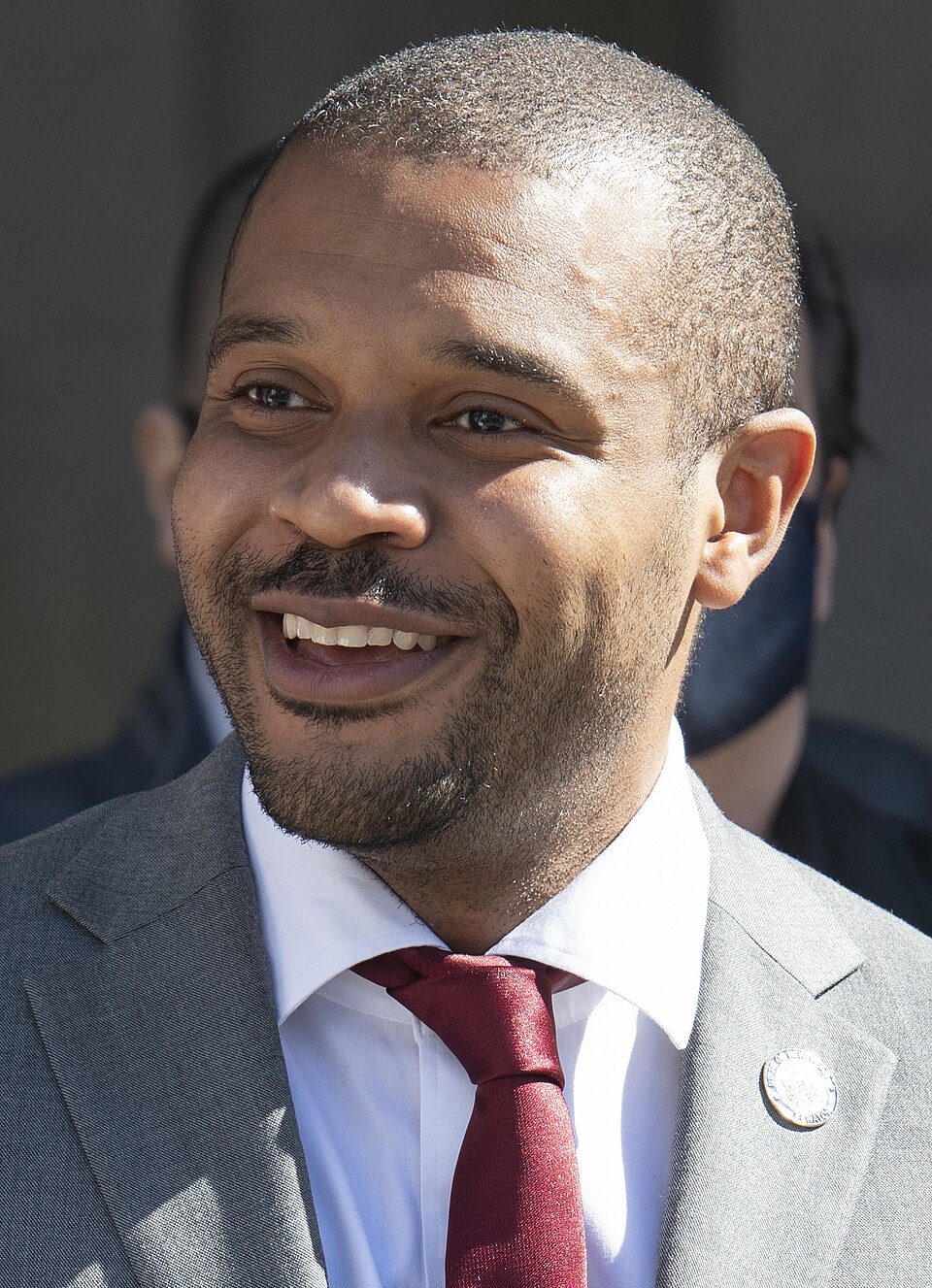

Jabari Brisport is individually listed as voting aye on S10642, a state bill that would pause new permits for large data centers for one year.
The bill is a proposal, because the sources here do not show it enacted into law. The school restrictions are a New York City Public Schools policy, and a state senator's endorsement does not set them.
- Party
- Democratic / Working Families
- State
- New York
- Office
- New York State Senator, District 25
- Age
- No verified birth date or dated age found.
- Political Leaning
- Not established beyond party affiliation.
- Election Status
- Current office is New York State Senator for District 25, per his official Senate biography. The sources here do not establish the November 3, 2026 election result, so no win, certification or future term is claimed.
Jabari Brisport's Position on AI
Brisport is individually listed as voting aye on S10642, the Responsible Data Center Development Act. Sen. Gonzalez sponsored the bill, and Sen. Krueger and Sen. Jackson are listed as co-sponsors, so Brisport's listed role is an aye vote without a sponsor or co-sponsor listing.
The bill would stop the state environmental department from issuing new permits and approvals to a large data center for one year after the act takes effect. The bill defines a large data center as one with a peak demand of 20 megawatts or more.
Brisport is named as an endorser of New York City's student-facing AI limits, backing a one-year pause plus selected pilots. The September 2, 2026 announcement cites his former teaching work.
The Senate passed S10642 through Assembly bill A11560. Neither his aye vote nor his endorsement makes him the official who sets or enforces either action.
Jabari Brisport's Background
Brisport was born in Bedford-Stuyvesant and raised in Prospect Heights, according to his official Senate biography. The biography describes him as a lifelong Brooklyn resident and the son of an undocumented immigrant.
At his election, he was a middle-school math teacher in Crown Heights and an active member of the United Federation of Teachers. The sources here list no degree or teaching credential beyond that role.
He represents District 25, which includes Bedford-Stuyvesant, Clinton Hill, Navy Yard and Ocean Hill. He chairs the Children and Families committee.
The biography lists organizing for same-sex marriage through the 2011 legalization and early Black Lives Matter activism. Its listed priorities include higher taxes on wealthy residents, the Green New Deal, the New York Health Act and universal housing access.
He is listed with Democratic and Working Families affiliations. The AI record on this page comes from the bill vote and the school endorsement, not from his biography.
Jabari Brisport's AI Policy Record
The bill applies different thresholds to different duties. The operative text sets the following terms.
- Definitions: A data center is one or more facilities at the same site, under common ownership or control, that receive electric, gas or water service, have applied or requested that service, or have caused a utility to incur an expense for providing it, and have a peak demand of one megawatt or more for listed computing, data processing, hosting or streaming uses. A large data center has a peak demand of 20 megawatts or more. Facilities majority-owned or controlled by a public research institution and used for research are excluded.
- Permit pause: The state environmental department could not issue a permit, certificate, registration, license or other approval to a large data center until one year after the effective date. The pause does not cover renewals, modifications or reissuances of earlier approvals, or large data centers that began construction on or before the effective date.
- Hearing: The department cannot issue an approval unless the data center has held at least one in-person public hearing in a host community not less than three months before issuance. The operator must give residents at least 30 days notice that includes the project summary, energy and water impacts, and incentives sought or awarded. The operator must also pay the hearing costs.
- Environmental report: The state environmental department must prepare a report covering electricity, water, land, pollution, electronic waste, public incentives and impacts on disadvantaged communities and Indigenous nations within ten miles. A draft gets at least 120 days of public comment, and the final report is due no later than 18 months after the article becomes law.
- Utility rates: Electric, gas, water and municipal utilities would each need a separate service classification for large data centers, with the costs of serving them assigned entirely to that class. The state utility commission could not approve a rate change that lacks that classification, and the classification must be fully implemented by June 1, 2030. The classification must also ensure no increases to surcharges, basic service or fixed charges that are not tied to actual energy use.
- Renewable energy: Data centers with a peak load of 5 megawatts or more must show, through annual third-party verification, that at least one-third of their electricity comes from renewable energy systems in 2030 to 2034. The share rises to two-thirds for 2035 to 2039 and to 90 percent in 2040 and later. A separate standard requires on-site renewable generation to the extent it is technologically, environmentally and practically feasible.
- Host communities: A new large data center, or an existing one whose expansion adds 20 megawatts or more, must fund a program for host community residents. The program covers home technologies such as heat pumps, distributed solar and behind-the-meter batteries, community infrastructure such as broadband and drinking water, and water protections. The state utility commission must open a proceeding within 90 days to set up the program, and the operator must file independently audited financial reports each year.
- Labor standards: Covered data centers of 5 megawatts or more face prevailing wage requirements for construction and expansion, except under a pre-hire collective bargaining agreement. Owners must require apprenticeship agreements or workforce training, must consider pre-apprenticeship direct-entry programs for local and disadvantaged workers, and must require iron and steel made in the United States.
| Date | Instrument | Brisport's role | Policy effect | Status |
|---|---|---|---|---|
| June 1, 2026 | S10642 as introduced | Not the sponsor; Sen. Gonzalez introduced it | Proposed data center permit pause and related duties | Committed to the Rules Committee when printed |
| June 4, 2026 (bill record) | S10642 as substituted by Assembly bill A11560 | Individually listed aye; Senate roll call of 43 ayes, 17 nays, 1 absent, 2 excused | Introduced S10642 text: one-year permit pause (substitute A11560 wording not compared) | Passed the Senate; no chaptered enactment shown |
| September 2, 2026 | NYC student-facing generative AI restrictions | Named endorser of a one-year pause plus selected pilots | City school-system policy | Announced by the city |
| 2026 to 2027 school year | NYC Public Schools AI and screen time guidance | No personal role shown | Bars student-facing generative AI in grades 2K through 8 | Published guidance |
Limits of Jabari Brisport's AI Restrictions
Student-facing generative AI is barred in grades 2K through 8 and limited to vetted, approved programs in grades 9 through 12. Assistive technology in an Individualized Education Program (IEP) or 504 plan remains available, along with other necessary disability and English-language tools. Teacher planning, supervised career-readiness courses with family notice, and approved pilots are allowed.
Staff may not use AI for grading, behavior monitoring, or placement, promotion or graduation decisions. Qualified professionals keep special education documentation and counseling duties.
Two 45-minute AI literacy modules are required for high school students. Screen guidance recommends no more than 30 daily minutes in grades 3 to 5 and 45 in grades 6 to 8, and no individual screen use in grades 2K-2.
Expanded review of algorithmic bias, equity and instructional effectiveness is a commitment, not a completed review. A coalition policy recommendation report is due in April 2027.
The bill's pause is temporary and excludes renewals, modifications and facilities already under construction. Its prevailing wage rule for community infrastructure projects of $1 million or more excludes certain one- and two-family homes, owners of four or fewer dwelling units, and some affordable or supportive housing projects.
The environmental report reviews public funds and tax incentives that data centers receive. The severability clause keeps the rest of the act in force if a court strikes one part after appeals are exhausted.
Jabari Brisport's Office and Election Status
Brisport is a state senator representing District 25, according to his official Senate biography.
The sources here date the policy actions to June and September 2026. They do not establish the result of the November 3, 2026 election, so this page does not claim a new win, certification or future term.
His full birth date and current age are not established in these sources, so this page states no age.
Reading Jabari Brisport's AI Record
Jabari Brisport voted for the Senate bill that would pause large data center permits for one year.
This reading would change if a new recorded vote, final enactment, a revised operative policy or a new statement from Brisport changed the scope.
To see whether S10642 has moved past the Senate, check the bill's status page.
Frequently Asked Questions
Did Jabari Brisport sponsor the data center bill?
No. Sen. Gonzalez sponsored S10642, and Sen. Krueger and Sen. Jackson are listed as co-sponsors. Brisport is listed as an individual aye vote on the bill, which is a different role.
Is the Responsible Data Center Development Act law?
The sources here do not show it as law. The bill was introduced on June 1, 2026, and the bill record shows Senate passage through Assembly bill A11560 with no chaptered enactment.
Did Jabari Brisport write New York City's school AI rules?
The sources do not show that. An endorsement is not authority or proof of authorship.
What does the bill's one-year pause cover?
It covers new permits, certificates, registrations, licenses and other approvals from the state environmental department to a large data center, meaning one with a peak demand of 20 megawatts or more. The pause runs one year after the effective date and does not cover renewals or modifications of earlier approvals, or large data centers that began construction on or before the effective date.
How old is Jabari Brisport?
The sources here do not give his full birth date or current age, so this page states no age.