James McGovern's Record on AI
Cosponsored data center restrictions and a yes vote on small business AI help
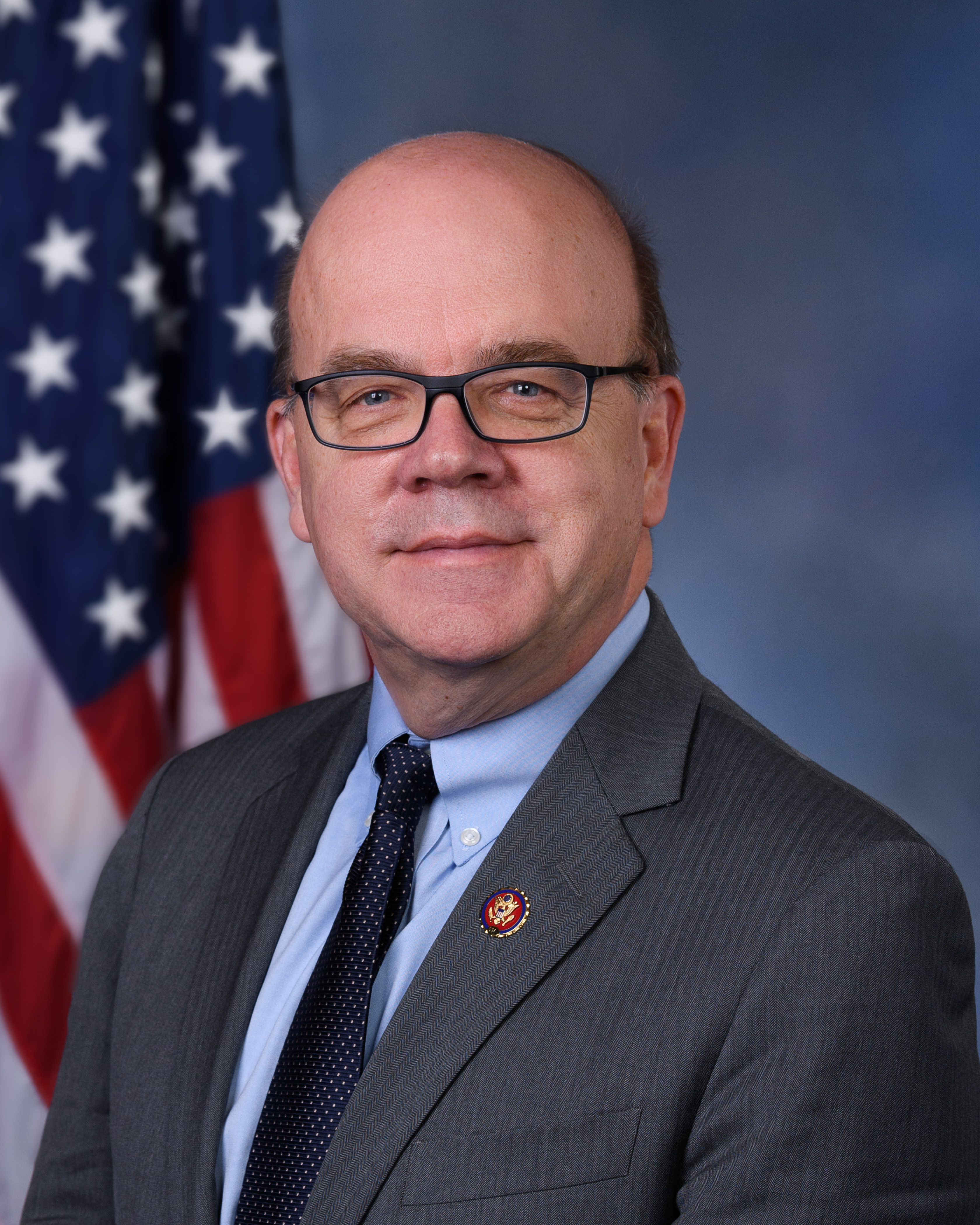

McGovern formally supports restricting AI data centers as an original cosponsor of H.R. 9442, though his record does not show opposition to AI in general. Cosponsorship, House votes and joint letters are different kinds of action. A cosponsor adds a name to a bill, and a joint letter does not show who wrote its wording.
- Party
- Democratic
- State
- Massachusetts
- Office
- U.S. Representative, Massachusetts District 2
- Age
- 66 as of 2026-11-05 · Source
- Political Leaning
- Congressional Progressive Caucus member (roster checked November 5, 2026).
- Election Status
- Reported won Massachusetts District 2 unopposed on November 3, 2026, per Primary Democrats citing an AP race call.
James McGovern's Position on AI
James McGovern formally supports restricting artificial intelligence (AI) data centers. He is an original cosponsor of House bill H.R. 9442, the Artificial Intelligence Data Center Moratorium Act, which would halt construction or upgrading of covered AI data centers upon enactment.
The pause is conditional. It ends only after laws establish product review, worker and benefit-sharing protections, utility and environmental protections, community approval, no subsidies, and union labor standards, and those laws must expressly terminate the pause. The introduced text sets no fixed one-year expiry.
House bill H.R. 9939 would prohibit construction and operation of covered AI data centers on federal land, and House bill H.R. 8488 would require public disclosure before a definitive development step.
The record also includes a yea vote on the AI for Main Street Act, a bill that would require small business development centers to help businesses evaluate and use AI. The House passed that bill 395 to 14 on January 20, 2026.
The record does not establish opposition to AI in general. The restrictions target specific facilities and federal land, and the business-assistance vote backs small business use of AI. Cosponsorship and a single yea are formal positions, and neither shows he opposes every AI model, use or deployment.
Background at a Glance
McGovern is a Democrat and the current Representative for Massachusetts District 2, according to the Congressional Directory dated February 20, 2026.
Born November 20, 1959, he had not reached his 67th birthday on November 4, 2026, so he was 66 that day.
| Detail | Information | Source |
|---|---|---|
| Party | Democratic | Congressional Directory |
| State and district | Massachusetts, District 2 | Congressional Directory |
| Current office | Representative, United States House of Representatives | Congressional Directory |
| Birthplace and date | Worcester, Massachusetts; November 20, 1959 | Congressional Directory |
| Age | 66 on November 4, 2026 | Calculated from the birth date in the Congressional Directory |
| Education | Bachelor of arts (B.A.) and master of public administration (M.P.A.), American University | Congressional Directory |
Background and Political Leaning
The official biography describes a Worcester Burncoat upbringing.
He earned a bachelor of arts (B.A.) and a master of public administration (M.P.A.) from American University, according to the Congressional Directory. The official biography says he worked for more than a decade in the office of Congressman Joe Moakley, a Democrat from South Boston, before he first won election to Congress in 1996.
The biography also describes a ranking Democratic role on House Rules and work on human-rights and anti-hunger policy. McGovern co-chairs the bipartisan Congressional Robotics Caucus, which was relaunched on May 30, 2025. The biography does not connect those roles to his AI cosponsorships, so this profile does not draw that link.
Statements and Actions on AI
McGovern's direct quotation on robotics comes from his office's May 30, 2025 release on the robotics caucus. The caucus's stated aim is to weigh responsible robotics deployment against its risks and benefits.
In that release, McGovern refers to "the promises and risks associated with the rise of robotics." That sentence says robotics may or may not be AI-enabled, so it does not address AI models or data centers directly.
On November 5, 2025, Representatives García and Nadler led House colleagues in demanding answers from Delta's chief executive about AI use in ticket pricing. McGovern is listed as a cosigner of that inquiry, which concerned individualized, surveillance-based AI airline pricing. A cosigned letter is a joint action, so the release does not attribute any of its wording to McGovern.
On August 10, 2026, Representative Casar's releases on OpenAI and Anthropic list McGovern among signatories seeking logs and answers about reported model security incidents. Joint oversight of this kind does not show that McGovern authored every sentence or independently verified each technical allegation.
Policies Supported and Opposed
McGovern's AI record pairs cosponsored data-center restrictions with a yea vote on a small business AI bill, and none of the four AI bills he cosponsored has passed a chamber.
S. 146, the TAKE IT DOWN Act, is the only measure in this table that has become law. The House passed the Senate bill 409 to 2 on April 28, 2025, and it became Public Law 119-12 on May 19, 2025. McGovern was recorded Not Voting on that House vote, and a Not Voting entry does not establish opposition or a reason.
The law covers knowing publication of nonconsensual intimate depictions, including specified digital forgeries created with AI or other software, subject to its conditions and exceptions. Covered platforms must have a notice and removal process within one year of enactment and remove covered depictions within 48 hours of a valid request.
H.R. 5764, the AI for Main Street Act, has passed only the House. McGovern voted yes on the House motion to suspend the rules and pass it as amended on January 20, 2026, and the Senate received it and referred it to the Committee on Small Business and Entrepreneurship on January 26, 2026.
The House-passed text would require small business development centers to help businesses evaluate and use AI, with information, guidance, training and outreach on best practices, business operations, data and intellectual property, cybersecurity, regulatory compliance and trust. Section 3 authorizes no additional funding. A yea vote supports the bill as a whole, and the record does not show his reasons.
The four cosponsored AI bills remain at the referral stage in the sources reviewed, and their scopes differ. H.R. 9442 covers facilities used for AI models at scale, plus facilities over 20 megawatts (MW) with high-density rack power of at least 20 kilowatts (kW) or liquid or immersion cooling. It does not automatically cover every server facility.
H.R. 9442 would also require quarterly public Energy Department reports on financing, water, power, emissions, wastewater, cooling chemicals, noise, jobs, agreements and subsidies. Verification powers include inspections and subpoenas, and the bill would restrict exports, reexports and in-country transfers of computing infrastructure for covered AI uses to entities in countries without comparable safeguards.
H.R. 9939 would prohibit construction and operation of covered AI data centers and associated infrastructure on federal land. Agencies or lessees would have to stop and begin removal within 30 days after enactment, and remediation would be required. Federal land includes Defense land but excludes land held in trust for a tribe or tribal member.
H.R. 8488 would require public and local-official disclosure at least 180 days before a definitive development step, along with multilingual outreach and developer-funded independent environmental analysis. It limits nondisclosure agreements (NDAs) and treats violations as unfair or deceptive practices under the Federal Trade Commission (FTC). The bill sets up a disclosure regime and does not ban construction outright.
The status record for H.R. 4640 records McGovern as a cosponsor as of July 25, 2025. Its latest action, dated July 23, 2025, referred the bill to Energy and Commerce, Judiciary, and Education and Workforce, and no enacted restriction is recorded.
| Date | Measure or action | McGovern's role or vote | Status in the sources reviewed | Source |
|---|---|---|---|---|
| April 28, 2025 | S. 146, TAKE IT DOWN Act (House suspension vote) | Recorded Not Voting | Became Public Law 119-12 on May 19, 2025 | Clerk roll call; enrolled text |
| May 30, 2025 | Congressional Robotics Caucus relaunch | Co-chair | Caucus statement, not a bill | McGovern office release |
| July 25, 2025 | H.R. 4640, Stop AI Price Gouging and Wage Fixing Act of 2025 | Cosponsor | Referred to committees; no passage | Bill status |
| November 5, 2025 | Inquiry to Delta on AI ticket pricing | Cosigner of a joint letter | Joint letter, not a bill or vote | García release |
| January 20, 2026 | H.R. 5764, AI for Main Street Act (House suspension vote) | Recorded Yea | Passed House 395 to 14; received in Senate and referred January 26, 2026 | Clerk roll call; House-passed text |
| April 23, 2026 | H.R. 8488, AI Data Center Site Selection Transparency Act of 2026 | Cosponsor | Referred to Energy and Commerce | Bill status |
| June 24, 2026 | H.R. 9442, Artificial Intelligence Data Center Moratorium Act | Original cosponsor | Referred to Energy and Commerce and Foreign Affairs | Bill text; bill status |
| July 23, 2026 | H.R. 9939, No AI Data Centers on Federal Lands Act | Cosponsor | Referred to Natural Resources | Bill status |
| August 10, 2026 | Letters to OpenAI and Anthropic about reported model security incidents | Signatory | Joint letters, not individual statements | OpenAI release; Anthropic release |
Current Office and the 2026 Election
Primary Democrats reports that McGovern won Massachusetts District 2 unopposed on November 3, 2026. The page attributes that result to a race call by the Associated Press (AP).
The timing of the AP call has not been independently verified.
The reported win is for Massachusetts District 2.
Scope and Open Questions
The four data-center and AI-pricing bills above show formal support. They do not show individual votes. The sources reviewed show no floor vote on any of them, and each remains at the referral stage.
The H.R. 9442 pause is conditional, the H.R. 9939 prohibition applies to federal land, and the H.R. 8488 bill requires disclosure. Each one covers a defined category of facility, land or process.
Several facts remain unknown. The sources show no Senate action on the AI for Main Street Act beyond referral, and no source shows whether any listed bill has moved since its status date. The record is also not exhaustive: it covers selected statements, bills and votes, not every AI statement or roll call.
Individual House votes appear on the Clerk's roll-call pages, such as the January 20, 2026 vote on the AI for Main Street Act. To see whether H.R. 9442 has advanced past referral, open its GovInfo bill status record and check the latest action date against the dates in this profile.
Frequently Asked Questions
Does James McGovern oppose artificial intelligence?
The sources reviewed do not show that. McGovern cosponsored bills that would restrict AI data centers, and he also voted yes on the AI for Main Street Act, which the House passed 395 to 14 on January 20, 2026. Restrictions on specific facilities and federal land do not establish opposition to every form or use of AI.
Did James McGovern vote against the TAKE IT DOWN Act?
No recorded vote against it appears in the sources reviewed. The Clerk roll call shows McGovern as Not Voting on the House suspension vote on April 28, 2025, and a Not Voting entry does not show opposition or a reason. The Senate bill, S. 146, passed the House 409 to 2 and became Public Law 119-12 on May 19, 2025.
Is the AI Data Center Moratorium Act law?
No. H.R. 9442 was introduced and referred to the Committee on Energy and Commerce and the Committee on Foreign Affairs, and the sources reviewed record no enactment. McGovern is an original cosponsor, which is formal support rather than a vote on the bill.