Jesús García's Record on AI
Formal support for artificial intelligence (AI) restrictions alongside votes on two AI bills
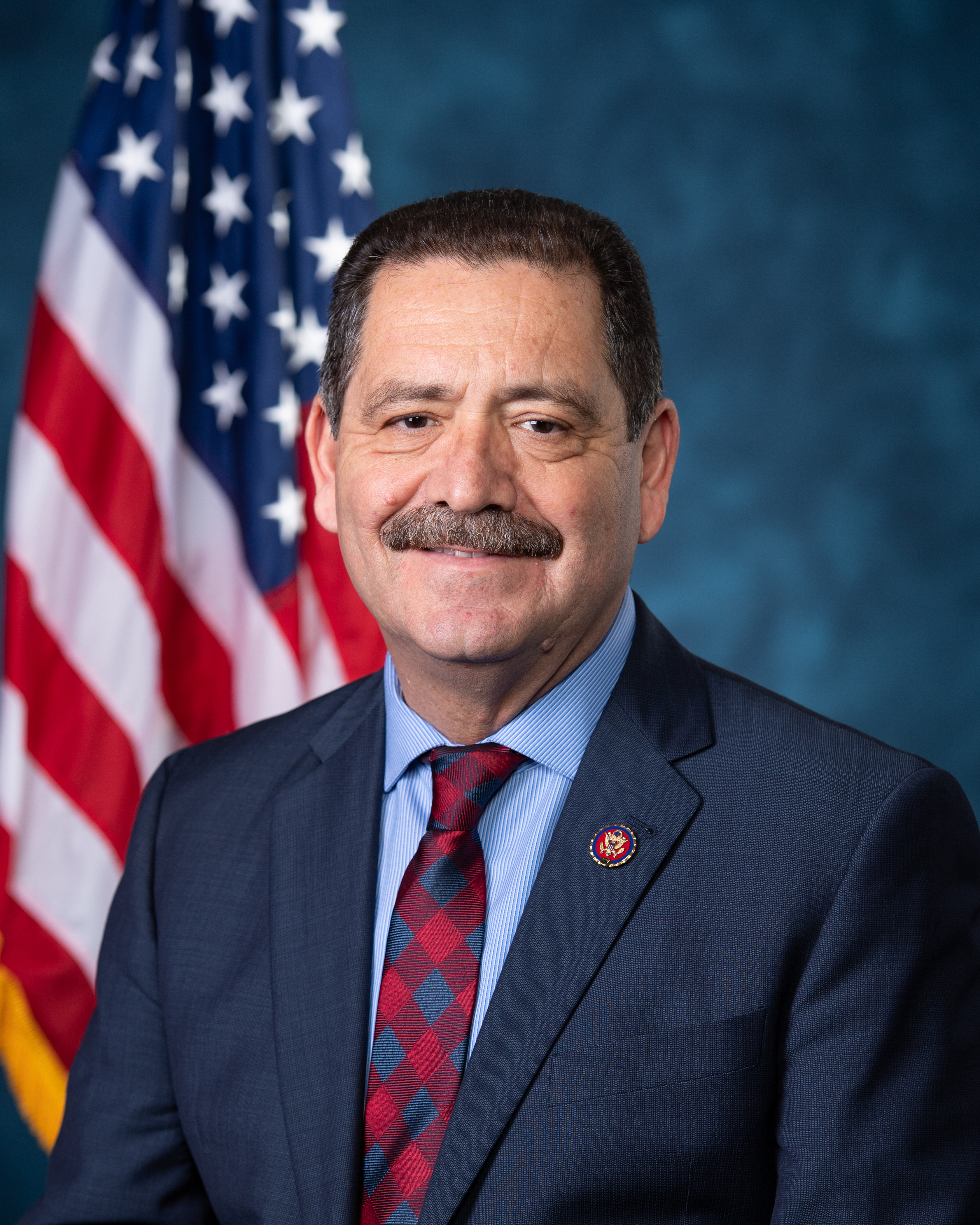

Jesús García, a Democrat from Illinois's 4th congressional district, has formally cosponsored House bills that would restrict advanced AI and AI data centers.
- Party
- Democratic
- State
- Illinois
- Office
- U.S. Representative, Illinois's 4th congressional district
- Age
- 70 as of 2026-11-04 · Source
- Political Leaning
- Progressive, as described in his official congressional biography
- Election Status
- Current U.S. Representative for Illinois's 4th district; Roll Call reported in November 2025 that he will not seek House reelection in 2026 and remains in office through his existing term.
Jesús García's Position on AI
García has formally cosponsored two bills that would restrict advanced artificial intelligence (AI) and AI data centers. He also voted yea on two AI-related House votes, and one of them, the TAKE IT DOWN Act, became law. Cosponsorship is a formal record of support, and the votes and cosponsorships do not establish a position on every AI product or use.
The first is the Ban Artificial Superintelligence Act of 2026, a House bill numbered H.R. 10538. It sets a conditional pause on advanced-AI training and unreleased deployment, lasting until a new cabinet Department of Artificial Intelligence is staffed and safety rules are issued, and it would prohibit developing or deploying superintelligence.
García is an original cosponsor of that bill and of the second one, H.R. 9442, the Artificial Intelligence Data Center Moratorium Act. H.R. 9442 would halt construction or upgrading of covered AI data centers upon enactment.
A supportive vote is on the AI for Main Street Act, H.R. 5764. García voted yea on the House motion to pass it as amended on January 20, 2026, when the House passed it 395 to 14. The bill would require small business development centers to help businesses evaluate and use AI.
Neither restrictive bill has passed the House or become law in the records checked, and both show referral as their latest action. Among these measures, only the TAKE IT DOWN Act is enacted.
Background at a Glance
García, a Democrat, is the current U.S. Representative for Illinois's 4th congressional district, according to the February 2026 Congressional Directory. The political leaning label comes from his own official biography, not from an outside rating.
| Item | Detail | Source |
|---|---|---|
| Born | April 12, 1956, Durango, Mexico | Congressional Directory |
| Age on November 4, 2026 | 70, calculated from the birth date | Congressional Directory |
| Political leaning | Progressive, as described in his official biography | Official biography |
| Election status | Will not seek House reelection in 2026; remains a House member through his existing term | Roll Call |
Background and Political Leaning
García's public career runs from Chicago local office through the Illinois Senate and Cook County government to the U.S. House. According to his official biography, he immigrated in 1965 from Los Pinos, Durango, Mexico, and worked as an organizer in Chicago's Little Village.
The Congressional Directory lists a bachelor's degree in political science from the University of Illinois Chicago in 1999 and a master's degree from the same university in 2002. The directory also lists García as a member of the Chicago City Council from 1986 to 1993, as a member of the Illinois State Senate from 1993 to 1999, and as founder of Enlace Chicago from 1999 to 2009.
The directory lists him as a Cook County commissioner from 2010 to 2018. His official biography also lists him as a candidate in the 2015 Chicago mayoral runoff.
His official biography identifies membership or leadership in the Congressional Progressive Caucus. That affiliation does not establish agreement with every policy or a more specific ideology.
The progressive label comes from his own biography.
Statements and Actions on AI
The documented AI actions are joint letters and formal sponsorship records.
García and Representative Nadler led a November 5, 2025, letter to Delta's chief executive, about generative AI in ticket pricing. The letter challenged opaque AI ticket pricing, asked about the Fetcherr partnership, and asked about data, safeguards and possible surveillance-based discrimination.
The letter asks for answers. It does not find that Delta broke a law, and it does not say that every AI ticket-pricing method is prohibited.
Casar's releases on OpenAI and Anthropic, dated August 10, 2026, list García among signatories seeking logs and answers about reported model security incidents. Joint oversight does not show that García wrote every sentence or verified the technical allegations in those letters.
Policies Supported and Opposed
García's formal record includes cosponsored restrictions on advanced AI and AI data centers, one enacted law he voted for, and one House-passed bill that supports business use of AI. Only the TAKE IT DOWN Act is law in the records checked.
The other items are introduced bills, a House resolution or joint letters. The House-passed AI for Main Street Act shows a Senate referral and no law entry.
The House passed the TAKE IT DOWN Act 409 to 2 on April 28, 2025, and it became Public Law 119-12 on May 19, 2025. The law covers knowing publication of nonconsensual intimate depictions, including specified digital forgeries made with AI or other software, subject to its conditions and exceptions.
Covered platforms must provide a notice and removal process within one year of enactment. They must remove covered depictions within 48 hours of a valid request, with reasonable efforts to remove known identical copies. The Senate passed the bill by unanimous consent on February 13, 2025, so the record holds no individual Senate vote for García.
The advanced-AI definition in H.R. 10538 begins at training compute of 10^25 integer or floating-point operations, adjusted annually. The bill would create a cabinet Department of Artificial Intelligence, and its superintelligence definition covers broadly superhuman cognition or a capacity to destroy or disempower humanity.
The pause on advanced-AI training, modification, fine-tuning and unreleased deployment lasts until that department is staffed and safety rules are issued. Limited remedial work is excepted, and advanced models would need predeployment approval. Dangerous systems would be paused, isolated and potentially made inoperative.
The bill would also require 24-hour discovery reporting and developer charters, and it would set penalties including up to 20 years in prison for specified reckless violations. Its whistleblower provisions would allow a discretionary waiver of the 10-year AI-industry employment bar for a non-policymaking individual who submitted information about a violation of Section 8, 9 or 12 to the Secretary, if the waiver is consistent with the department's protective purpose. The waiver does not grant automatic immunity from every penalty.
H.R. 9442 covers facilities used for AI models at scale. A second branch covers facilities over 20 megawatts (MW) with high-density rack power of at least 20 kilowatts (kW) or liquid or immersion cooling. The bill does not automatically cover every server facility.
The pause would halt construction or upgrading of new or existing covered AI data centers upon enactment. It ends only after laws establish product review, worker and benefit-sharing protections, utility and environmental protections, community approval, no subsidies and union labor standards. Those laws must also expressly terminate the pause, and the bill has no fixed one-year expiry.
The bill would require quarterly public Energy Department reports on financing, water, power, emissions, wastewater, cooling chemicals, noise, jobs, agreements and subsidies. Verification powers include inspections and subpoenas. The bill would also restrict computing-infrastructure exports, reexports and in-country transfers for covered AI uses to entities in countries without comparable safeguards.
H.Res. 1642 is a House resolution expressing a position against exceptional bailouts for insolvent AI-related firms and exposed financial institutions. It supports ordinary bankruptcy and resolution, worker and consumer assistance, retirement protection and financial reforms instead. It does not appropriate money or create an enforceable ban on AI-company bailouts, and García is a cosponsor as of October 29, 2026.
H.R. 4640, the Stop AI Price Gouging and Wage Fixing Act of 2025, lists García as a cosponsor as of August 15, 2025, after its July 23, 2025 referral.
The House passed the AI for Main Street Act 395 to 14 on January 20, 2026. The bill would require small business development centers to help businesses evaluate and use AI, through information, guidance, training and outreach on best practices, business operations, data and intellectual property, cybersecurity, regulatory compliance and trust. Section 3 authorizes no additional funding, and a yea vote supports this whole business-assistance bill without establishing a broader view of AI.
| Date | Measure | García's role | Status in the record |
|---|---|---|---|
| 2025-04-28 | TAKE IT DOWN Act (S. 146) | Recorded yea on House vote to suspend the rules and pass, per the Clerk roll call | Enacted as Public Law 119-12 on May 19, 2025 |
| 2025-08-15 | Stop AI Price Gouging and Wage Fixing Act of 2025 (H.R. 4640) | Cosponsor | Referred July 23, 2025; no passage in the record |
| 2025-11-05 | Delta letter on AI ticket pricing | Co-led letter with Representative Nadler | Request for information; no finding in the record |
| 2026-01-20 | AI for Main Street Act (H.R. 5764) | Recorded yea on House motion to suspend the rules and pass as amended, per the Clerk roll call | Passed the House 395 to 14; received in the Senate and referred January 26, 2026; no law entry |
| 2026-06-24 | Artificial Intelligence Data Center Moratorium Act (H.R. 9442) | Original cosponsor | Referred to committees; no enactment in the record |
| 2026-08-10 | Casar releases on OpenAI and Anthropic | Listed signatory | Requests for logs and answers; no finding in the record |
| 2026-09-24 | Ban Artificial Superintelligence Act of 2026 (H.R. 10538) | Original cosponsor | Referred to the Committee on Oversight and Government Reform; no enactment |
| 2026-10-29 | House resolution on AI-market bailouts (H.Res. 1642) | Cosponsor | Referred to committees; no enactment |
Current Office and the 2026 Election
García is the current U.S. Representative for Illinois's 4th district, and Roll Call reported in November 2025 that he will not seek House reelection in 2026. He remains a House member through his existing term, and the records checked do not establish a successor or a district for a later term.
The sources checked do not establish any other office he is seeking.
Scope and Open Questions
The record supports a narrow answer. García formally backs specific AI restrictions, has voted for specific AI bills, and has joined joint oversight letters, but the records checked do not establish a position on AI as a whole.
Several gaps remain. The sources checked do not include a complete roll-call history, every AI statement García has made, or every AI bill he has cosponsored. The two House votes listed are yea votes, and an absence on any other vote would not establish a position on that measure.
Both restrictive bills show referral as their latest action in the records checked, and no committee action beyond referral appears in those records.
To check whether the superintelligence bill has moved, open its status record for H.R. 10538 and compare the latest action date with the dates in the table above.
Frequently Asked Questions
Has Jesús García voted for an AI law?
Yes. García was recorded yea on the House vote for the TAKE IT DOWN Act on April 28, 2025, and the measure became Public Law 119-12 on May 19, 2025. His yea on the AI for Main Street Act is a House vote on a bill that passed the House but has no law entry in the records checked.
Is the superintelligence ban law?
No. The Ban Artificial Superintelligence Act of 2026 (H.R. 10538) was referred to the House Committee on Oversight and Government Reform on September 24, 2026, and no enactment is recorded. García is an original cosponsor, which is a formal record of support and not a vote.
Does García oppose all AI?
The record does not show that. His formal actions target specific harms and specific bills, and he voted yea on a House bill that would require small business development centers to help businesses evaluate and use AI. The sources checked do not establish a position on AI products or uses beyond the bills and letters listed here.
Is García running for reelection to the House in 2026?
Roll Call reported in November 2025 that he will not seek House reelection in 2026. He remains a House member through his existing term, and the sources checked establish no other office he is seeking.