Josh Shapiro's AI Policy Record
Pennsylvania Governor Josh Shapiro's documented AI actions and public statements
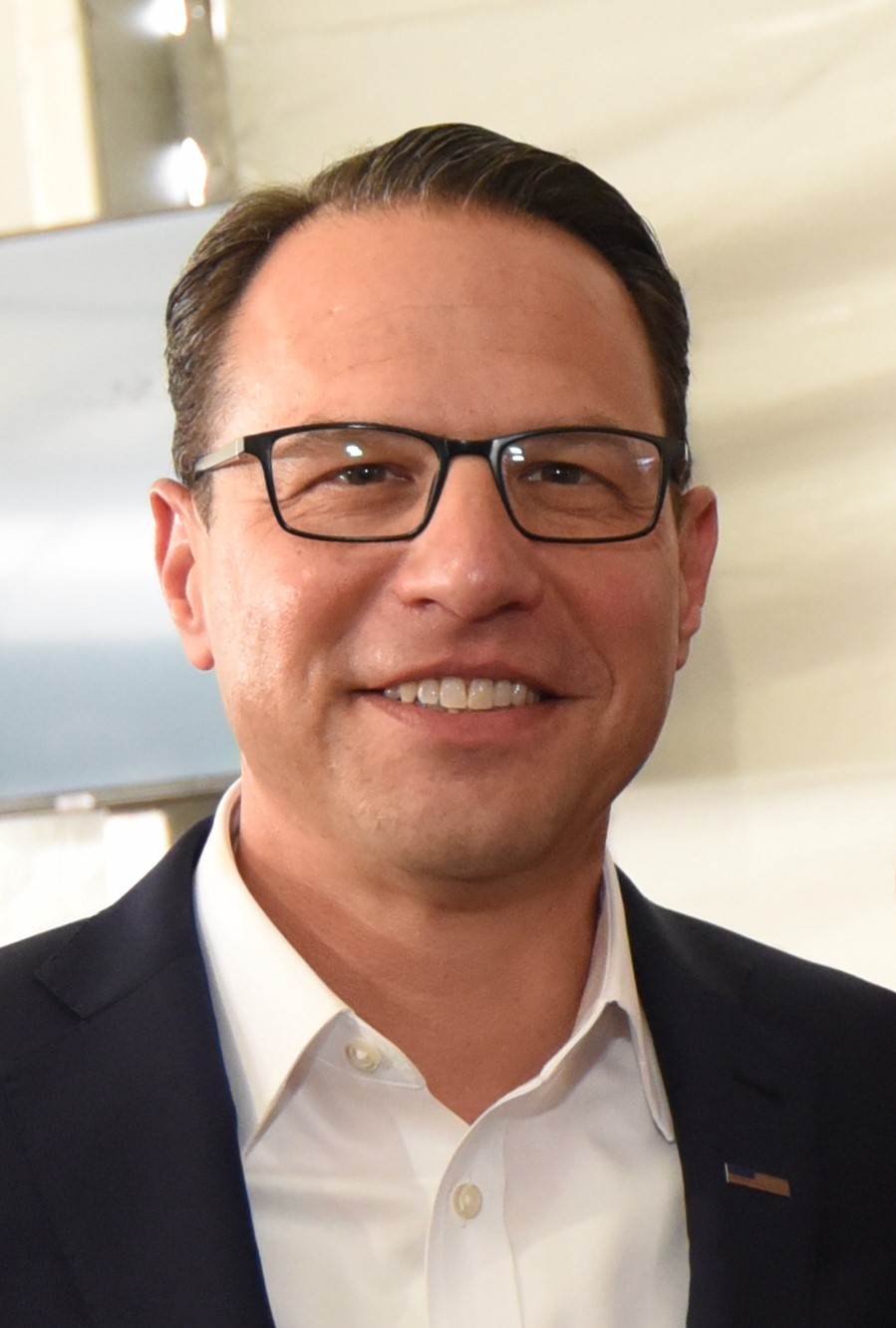

Josh Shapiro is the Democratic governor of Pennsylvania, in office since January 17, 2023. His documented artificial intelligence (AI) record comes from an executive order, a Department of State lawsuit, a utility regulatory petition, prepared remarks and a state AI pilot announcement. The record shows selective restrictions on AI and does not show opposition to the technology as a whole.
Each item carries a different status, and the difference matters when reading it. The executive order is an operative order. The lawsuit contains allegations. The speeches state proposed views, while the utility filing and the pilot results come from administration reporting.
- Party
- Democratic
- State
- Pennsylvania
- Office
- Governor of Pennsylvania (in office since January 17, 2023)
- Age
- 53 as of 2026-11-05 · Source
- Political Leaning
- Democratic Party affiliation; the sources reviewed do not establish a narrower ideology.
- Election Status
- The Associated Press reported Shapiro's reelection in the 2026 election; the AP call alone does not establish certification. He is the current governor, in office since January 17, 2023.
Josh Shapiro's Position on AI
Shapiro's record combines data-center review and consumer safeguards, a state lawsuit over alleged medical impersonation, and proposed frontier AI oversight, alongside active state AI adoption. It supports selective restrictions on AI. It does not show universal opposition to the technology.
Background at a Glance
Josh Shapiro is a Democratic governor of Pennsylvania, in office since January 17, 2023. The National Governors Association (NGA) biography lists his June 20, 1973 birth date and his Democratic affiliation, and the table draws on that biography and the Associated Press (AP) election report.
| Field | Detail |
|---|---|
| Name | Josh Shapiro |
| Party | Democratic |
| Office held | Governor of Pennsylvania, since January 17, 2023 |
| Date of birth | June 20, 1973 (age 53 as of November 4, 2026) |
| Office sought | Governor, 2026 election (reelection reported by the AP) |
Josh Shapiro's Background and Political Leaning
Shapiro's background runs from congressional staff work to the Pennsylvania House, Montgomery County government and the attorney general's office before he became governor. He was born in Kansas City in 1973 and attended Akiba Academy. A Pennsylvania House historical biography records a political-science bachelor's degree from Rochester in 1995 and a Juris Doctor (JD) from Georgetown in 2002.
Between 1994 and 2003 he worked as a congressional aide, and from 1999 to 2003 he was chief of staff to Hoeffel. He was elected to the Pennsylvania House for the 2005 term and three further terms. He served as Deputy Speaker in 2007 and resigned from the House on January 3, 2012.
He then served as Montgomery County commissioner from 2012 to 2016 and as attorney general from 2017 until January 16, 2023. He took office as governor the next day. The sources reviewed establish Democratic Party affiliation and nothing narrower, so no finer ideology is assigned here.
Josh Shapiro's Statements on AI
Shapiro's public statements reject both an indefinite halt to all AI and unrestrained acceleration, and they call for independent oversight of frontier AI. In prepared remarks for AI Horizons on September 17, he called for transparency and safety in frontier AI oversight and said the public should decide these questions, not only industry.
He recognized potential benefits in health, work, science, agriculture and infrastructure. He backed U.S. leadership and coordination with allies, plus engagement with China, while noting possible limits on technology sharing or the pace of frontier development.
These are personal policy views in a speech. They do not establish enacted law or factual risk forecasts.
In prepared remarks at the August 18 signing ceremony for Executive Order 2026-05 (EO 2026-05), Shapiro framed infrastructure expansion and investment alongside cost and public protections. The remarks show openness to data-center development and do not call for a ban. They mention earlier data-center investment announcements in Salem and Falls Townships, and they frame the protections as developer-paid costs and local, community and environmental safeguards.
These are announcements and political rationale, not completed investment outcomes.
Investment pledges in those remarks are not completed results. Where a speech and the signed order differ, the order controls.
In his August 18 prepared remarks, Shapiro pointed to earlier data-center investment announcements in Salem and Falls Townships. He framed infrastructure expansion and investment alongside developer-paid cost, local, community and environmental protections. The remarks show active openness to development.
They do not report completed investment or job results.
Policies Supported and Opposed
The operative policy in Shapiro's record is Executive Order 2026-05, signed August 18 and published September 5. It adds review and reporting conditions to large data-center projects. Documented opposition is narrower: he rejects an indefinite halt to all AI and condemns impersonating licensed professionals.
The order's main provisions are these.
The Department of State sued Character Technologies on May 5 over a Character.AI chatbot. The lawsuit alleges the bot presented itself as a Pennsylvania-licensed psychiatrist and gave an invalid license number. It alleges unauthorized practice under the Medical Practice Act and seeks a preliminary injunction to stop the impersonation.
The announcement describes these allegations and a requested injunction; it does not establish a court outcome. Shapiro's personal statement condemns impersonating licensed professionals while recognizing responsible technology. The same announcement describes budget reforms he proposed for 2026 to 2027.
They include age verification and parental consent for AI companion bots. They also call for bots to detect child references to self-harm or violence and direct them to appropriate authorities. They also prohibit sexually explicit or violent content featuring children.
The reforms remain proposals.
The administration reported in an October 16 announcement that it filed a petition on October 15 seeking formal party status in the PPL Electric Utilities rate case. The petition backs a complaint from the Office of Consumer Advocate about rate classifications and procedures. If the request is granted, party status would let the administration present evidence, make legal arguments, and participate directly in the case.
The release seeks a separate customer class for large data centers. It also seeks protection against shifted transmission costs and reliability risks. The release also advocates developer-cost allocation, transmission upgrades, regional reliability and resource adequacy costs, and supply shortfall protections.
The administration also says that its own agencies are PPL customers. The filing is a request to join. The announcement reports a request; it does not establish whether party status was granted or a tariff adopted.
- New data-center applications over 25 megawatts (MW) enter a rolling review under the GRID consent order, after local approvals.
- Non-signers have an alternative route. Local approvals and water authorizations come first, then applications are reviewed together. The order does not guarantee a permit.
- Data centers are removed from Fast Track.
- The order restricts nondisclosure agreements (NDAs) for agencies under the governor's jurisdiction. It does not reach every private NDA.
- Annual energy and water reporting is due July 1, beginning in 2027.
- A special counsel is directed to advocate for PUC protections. The order does not say the governor personally enacted a tariff.
- The order stays in force until amended or rescinded, and it creates no private enforceable right.
Current Office and the 2026 Election
The AP reported Shapiro's reelection in the 2026 election, and that call is not certification. He is the sitting governor, in office since January 17, 2023, not a governor-elect.
What the Record Establishes
The record documents an operative executive order and several filings, statements and reports. It does not establish outcomes in the lawsuit, the utility proceeding or the pilot.
The March 21, 2025 pilot announcement describes a ChatGPT pilot with 175 employees across 14 agencies, with human oversight and training. The administration reports an average of 95 minutes saved per day, self-reported. Shapiro states that AI should enhance employees rather than replace them.
- The Character.AI lawsuit contains allegations, not findings, and the record does not establish that an injunction was granted.
- Executive Order 2026-05 keeps a route for non-signers after local approvals. It is not a statewide moratorium.
- The utility filing is reported by the administration. The record does not show that party status was granted or that the proceeding was resolved.
- The pilot figures are administration-reported. They are not causal results.