Mark DeSaulnier's Record on AI
A cosponsored data center pause and two House votes on AI bills
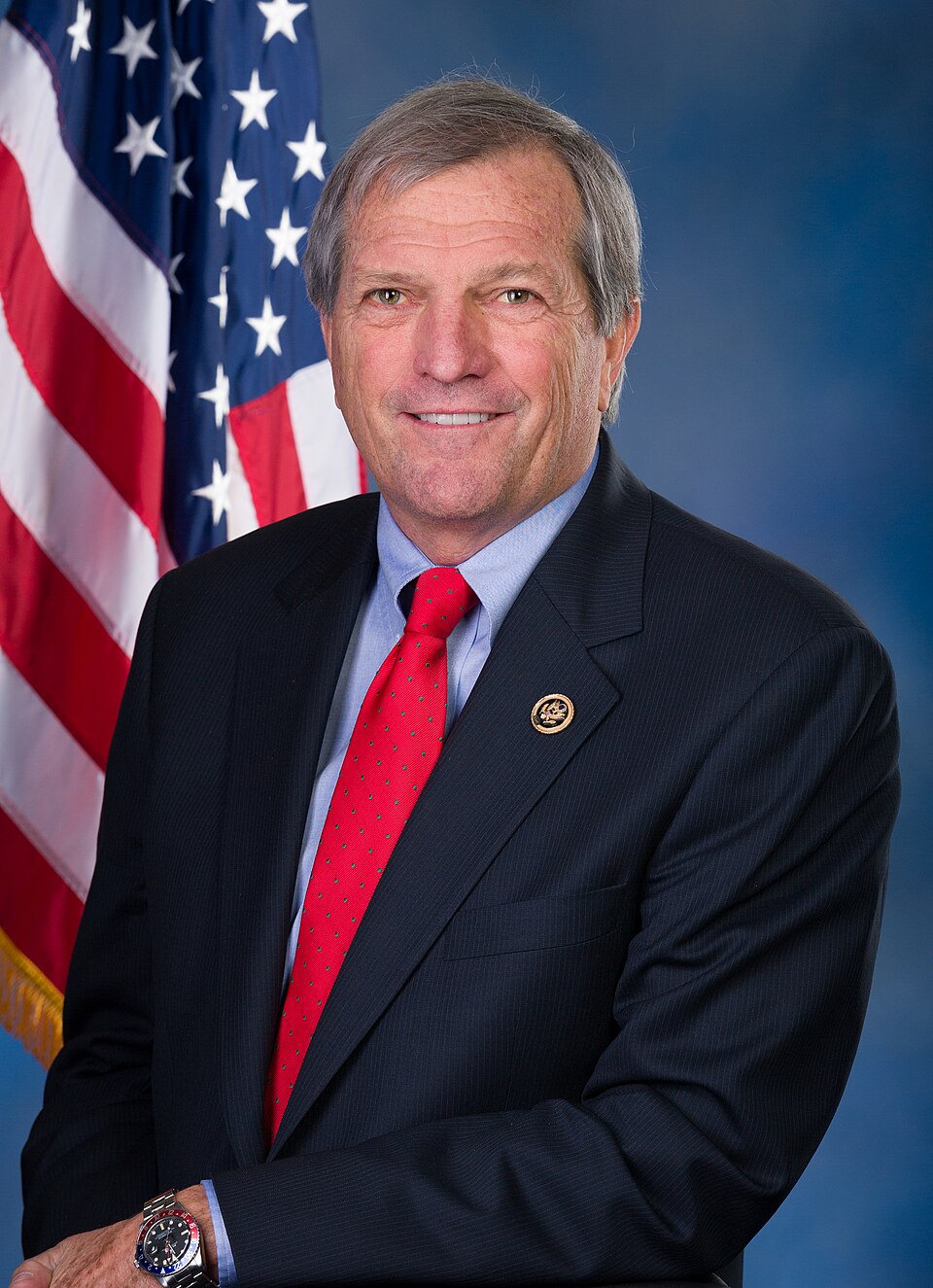

Mark DeSaulnier, a Democrat who represents California's 10th Congressional District, formally supports a restriction on covered artificial intelligence (AI) data centers. He is a cosponsor of House bill H.R. 9442, the Artificial Intelligence Data Center Moratorium Act, which would halt construction and upgrades of those facilities until specified protections are established by law. His voting record also includes yes votes on the AI for Main Street Act and the TAKE IT DOWN Act.
Those items are his formal record on AI. A June 2026 newsletter from his office also describes his concern about cognitive and mental-health effects and the need for regulation. That newsletter is his office's account of his remarks. It is not a bill or a vote.
- Party
- Democratic
- State
- California
- Office
- U.S. Representative, California's 10th Congressional District
- Age
- 74 as of 2026-11-05 · Source
- Political Leaning
- Congressional Progressive Caucus member (roster checked November 5, 2026).
- Election Status
- Reported call by KQED: reelected in California's 10th District, with the call at 8:42 p.m. Pacific time on November 3, 2026; not certified in the public record.
Mark DeSaulnier's Position on AI
Mark DeSaulnier formally cosponsored H.R. 9442, which would halt construction and upgrades of covered AI data centers upon enactment. He was not an original cosponsor, and the cosponsorship is dated July 21, 2026.
The pause is conditional. It ends only after laws establish product review, worker and benefit-sharing protections, utility and environmental protections, community approval, no subsidies and union labor standards. Those laws must expressly terminate the pause, and the introduced text sets no fixed one-year expiry.
On the supportive side, DeSaulnier voted yes on the AI for Main Street Act on January 20, 2026, and yes on the TAKE IT DOWN Act on April 28, 2025. The AI for Main Street Act passed the House 395 to 14, and the TAKE IT DOWN Act passed 409 to 2.
These records show formal support for one proposal and two House votes. They do not establish opposition to AI in general, and a yes vote on a bill does not show support for every use of AI that bill touches.
Background at a Glance
The Congressional Directory lists Mark DeSaulnier as a Democrat and U.S. Representative for California's 10th District. Calculated from his listed birth date of March 31, 1952, he was 74 years old on November 4, 2026.
| Item | Detail | Source |
|---|---|---|
| Party | Democratic | Congressional Directory |
| State and district | California, 10th District | Congressional Directory |
| Current office | U.S. Representative | Congressional Directory |
| Birth | March 31, 1952, Lowell, Massachusetts | Congressional Directory |
| Age | 74 on November 4, 2026 | Calculated from the listed birth date |
| Education | B.A. in history, College of the Holy Cross, Worcester, Massachusetts, 1974 | Congressional Directory |
| Office sought | U.S. Representative, 10th District, 2026 election (reelection reported) | KQED |
Background and Political Leaning
DeSaulnier worked as a deputy probation officer from 1970 to 1974 and as a hotel service employee in 1975 and 1976, according to the Congressional Directory. The directory also lists him as a restaurant general manager in 1978 and as a restaurant owner from 1978 to 2006.
He earned a bachelor's degree in history from the College of the Holy Cross in Worcester, Massachusetts, in 1974. His official biography says he was born in Lowell, Massachusetts.
The official biography says he is a former member of the Teamsters and of a hotel and restaurant union. It describes him as a Bay Area restaurant owner and manager before his local government and state legislative service in Concord and California.
He served on the Concord City Council from 1991 to 1994, and he served as mayor of Concord in 1993. He then served on the Contra Costa Board of Supervisors from 1994 to 2006, in the California State Assembly from 2006 to 2008, and in the California State Senate from 2008 to 2015.
The official biography also lists membership or leadership in the Congressional Progressive Caucus. No source in the public record sets out a finer ideological label, and this profile does not infer one from his party. Membership of that kind does not establish agreement with every policy.
Statements and Actions on AI
One personal item on AI is a June 8, 2026 newsletter from his office. The newsletter describes his participation in a higher-education AI hearing held by the Education and Workforce Committee.
The same newsletter describes his concern about cognitive and mental-health effects and the need for regulation. That is his office's account of his remarks, not independent medical evidence of a causal effect, and this profile does not treat it as one.
The other personal item is a September 17, 2026 letter led by Representative Yassamin Ansari that seeks international AI security safeguards. DeSaulnier is listed as a signatory, which does not show that he wrote the letter or made an individual statement about it.
The public record contains no separate personal quotation about H.R. 9442 or the two House votes. His positions on those items rest on the cosponsorship and the recorded votes.
Policies Supported and Opposed
DeSaulnier's formal AI record consists of one cosponsored restriction and two supportive House votes, plus two personal items. The record listed here includes no nay vote on an AI bill and no stated objection to an AI policy.
H.R. 9442 defines covered facilities in two ways. One branch reaches facilities used for AI models at scale. The other covers facilities above 20 megawatts with high-density rack power of at least 20 kilowatts or liquid or immersion cooling, and the text does not reach every server facility automatically.
Under the introduced text, the bill would require quarterly public reports from the Energy Department on financing, water, power, emissions, wastewater, cooling chemicals, noise, jobs, agreements and subsidies. Its verification powers include inspections and subpoenas. It would also restrict exports, reexports and in-country transfers of computing infrastructure for covered AI uses to entities in countries without comparable safeguards.
H.R. 9442 is a proposal, not law. The status record lists referral to the Energy and Commerce Committee and, in addition, the Foreign Affairs Committee, with its latest action dated June 24, 2026 and no enactment recorded.
The AI for Main Street Act, H.R. 5764, passed the House 395 to 14 on January 20, 2026, and DeSaulnier was recorded Yea on the motion to suspend the rules and pass it as amended. The House-passed text would require small business development centers to help businesses evaluate and use AI. That help would include information, guidance, training and outreach on cybersecurity, data and intellectual property, and regulatory compliance.
A January 26, 2026 action sent the bill to the Senate and referred it to the Small Business and Entrepreneurship Committee, and the public record shows no enactment. Section 3 authorizes no additional funding. A yea vote supports the whole bill, not every use of AI, and it does not reveal a broader AI philosophy.
The TAKE IT DOWN Act, S. 146, passed the House 409 to 2 on April 28, 2025, and DeSaulnier was recorded Yea. It became Public Law 119-12 on May 19, 2025, after Senate passage by unanimous consent on February 13, 2025, which was not a recorded roll call.
The enrolled text addresses knowingly publishing nonconsensual intimate depictions, including specified digital forgeries made with AI or other software, subject to its conditions and exceptions. Covered platforms must provide a notice and removal process within one year of enactment and remove covered depictions within 48 hours of a valid request. This is a specific harmful-use restriction. It does not ban AI or synthetic media.
This record is bounded. It covers the bills and personal items listed here, not every AI statement or roll call.
| Date | Item | DeSaulnier's role | Status in the public record | Source |
|---|---|---|---|---|
| April 28, 2025 | TAKE IT DOWN Act (S. 146) | Yea on House motion to suspend the rules and pass | Public Law 119-12, May 19, 2025 | Clerk roll call 104 |
| January 20, 2026 | AI for Main Street Act (H.R. 5764) | Yea on House motion to suspend the rules and pass as amended | Passed House 395 to 14; not law | Clerk roll call 33 |
| June 8, 2026 | Office newsletter on a higher-education AI hearing | Describes his participation and concerns | Office account; not a bill or vote | Newsletter |
| July 21, 2026 | H.R. 9442, Artificial Intelligence Data Center Moratorium Act | Cosponsor, not original | Introduced and referred; no enactment in the public record | GovInfo status record |
| September 17, 2026 | Letter led by Representative Yassamin Ansari on international AI security safeguards | Listed signatory | Letter; not a bill | Ansari press release |
Current Office and the 2026 Election
KQED reports that Mark DeSaulnier was reelected in California's 10th Congressional District, but the public record does not yet include a certified result.
KQED's results entry for the 10th District shows a call at 8:42 p.m. Pacific time on November 3, 2026. That call time applies to the 10th District, not the neighboring 12th District.
A missing certification is an evidence limit, not proof that California has not certified the result. This profile therefore treats the outcome as a reported call.
The Congressional Directory is dated February 20, 2026, so it cannot confirm November results. It lists him as the current representative for the same 10th District seat.
Scope and Open Questions
The largest open question is whether House bill H.R. 9442 moves past referral. Its latest recorded action is dated June 24, 2026, and the public record shows no enactment.
Other questions remain open. It is unknown whether DeSaulnier has additional AI statements, cosponsorships or votes beyond those listed here, and whether his newsletter remarks tie to a specific proposal. The record covers only the items on this page, so an item missing from it proves nothing either way.
A cosponsorship or yes vote marks a formal position on that item. It does not settle his view on every AI policy, and this page does not score his AI position against other members.
To confirm whether H.R. 9442 has moved since its June 24, 2026 action, open the GovInfo bill status record and read the latest action date.
Frequently Asked Questions
Is Mark DeSaulnier against AI?
The public record does not establish that. His formal AI record includes cosponsorship of a conditional pause on covered AI data centers and yes votes on two bills, one of which would help small businesses evaluate and use AI.
Those items show specific positions, not a general stance for or against AI.
Is the AI for Main Street Act law?
No, not in the public record. The House passed H.R. 5764 by 395 to 14 on January 20, 2026. A January 26, 2026 action sent it to the Senate and referred it to the Small Business and Entrepreneurship Committee, and Section 3 authorizes no additional funding.
Does the TAKE IT DOWN Act ban AI?
No. The enacted law, Public Law 119-12, addresses knowingly publishing nonconsensual intimate depictions, including specified digital forgeries made with AI or other software, subject to its conditions and exceptions.
It does not ban AI or synthetic media. It requires covered platforms to remove covered depictions within 48 hours of a valid request.
Has Mark DeSaulnier's 2026 reelection been certified?
The public record does not show certification. KQED reports a call for the 10th District at 8:42 p.m. Pacific time on November 3, 2026.
That is a reported call. Treat the result as unconfirmed until an official certification appears in the record.