Paul Tonko's Record on AI
Cosponsorship of a superintelligence ban and a House vote for a small-business AI bill
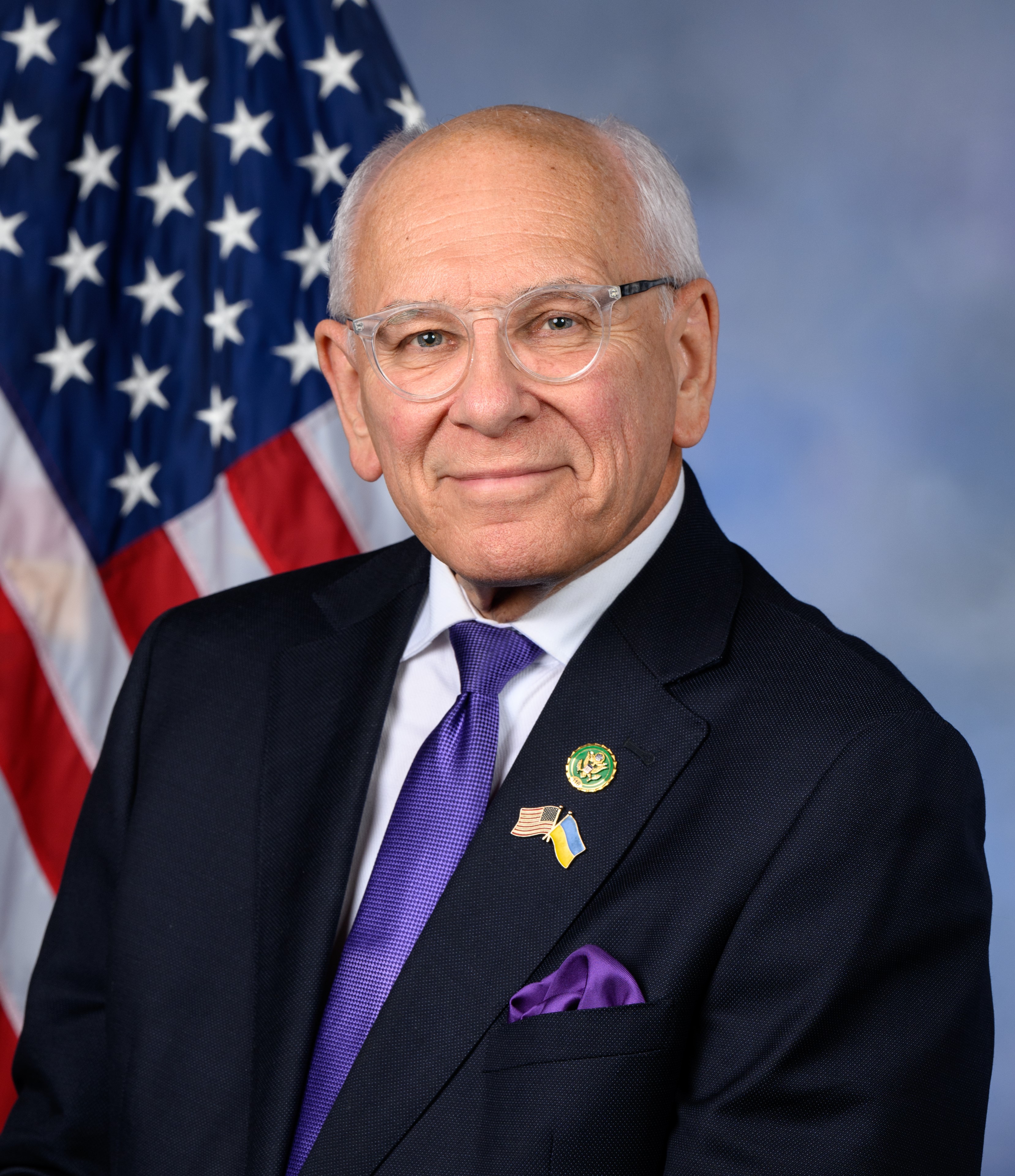

Paul Tonko, the Democratic U.S. Representative for New York's 20th Congressional District, combines formal support for restricting advanced AI with votes on narrower AI measures. The distinction in his record is between what has been proposed or passed and what has become law.
- Party
- Democratic
- State
- New York
- Office
- U.S. Representative, New York's 20th Congressional District (current office)
- Age
- 77 as of 2026-11-05 · Source
- Political Leaning
- Congressional Progressive Caucus member (roster checked November 5, 2026).
- Election Status
- Reported reelected in New York's 20th District on November 4, 2026, per the WAMC election report; not certified, and the reviewed sources contain no certification record.
Paul Tonko's Position on AI
Paul Tonko has formally supported a conditional pause on advanced AI and a ban on superintelligence, but that support is a cosponsorship of a bill that has not become law.
The bill status record lists him as a later cosponsor, not an original cosponsor, of H.R. 10538, the Ban Artificial Superintelligence Act of 2026, with the cosponsorship dated October 13, 2026.
His record also includes a yea on the AI for Main Street Act, a bill that would require small business development centers to help businesses evaluate and use AI, and a yea on the TAKE IT DOWN Act, which covers nonconsensual intimate depictions, including specified digital forgeries made with AI or other software.
The superintelligence bill covers advanced AI systems and superintelligence. The records reviewed show support for specific AI measures and do not show blanket opposition to artificial intelligence.
Background at a Glance
Paul Tonko is 77 years old as of November 4, 2026, based on the June 18, 1949 birth date in the Congressional Directory.
That directory is dated February 20, 2026, so it cannot confirm the November 2026 election result, which the election section covers separately.
| Item | Detail | Source |
|---|---|---|
| Name | Paul Tonko | Congressional Directory |
| Party | Democratic | Congressional Directory |
| Current office | U.S. Representative | Congressional Directory |
| State and district | New York, 20th District | Congressional Directory |
| Birthplace and date | Amsterdam, New York; June 18, 1949 | Congressional Directory |
| Age | 77 on November 4, 2026 | Calculated from the directory birth date |
| Office sought in 2026 | U.S. House, 20th District (reelection) | WAMC election report |
| 2026 election status | Reported reelected; not certified | WAMC election report |
Background and Political Leaning
Tonko studied mechanical and industrial engineering at Clarkson University in Potsdam, New York, and the Congressional Directory lists a B.S. in 1971. The reviewed sources give his birthplace but no family or upbringing details.
The directory lists work as an engineer for the New York State Department of Transportation and the New York State Department of Public Service. It then lists service on the Montgomery County Board of Supervisors from 1976 to 1983, including a term as chairman from 1981 to 1983.
He served in the New York State Assembly from 1983 to 2007 and chaired its Standing Committee on Energy from 1992 to 2007. He then served as president and chief executive officer of the New York State Energy Research and Development Authority from 2007 to 2008, according to the directory.
The official biography describes his engineering background, his former role as president and CEO of the energy authority, and a ranking role on the Energy and Commerce environment subcommittee in the 119th Congress. The directory's career list is a historical sequence, so the subcommittee role rests on the official biography alone.
No finer ideological label is established in the reviewed records. Party affiliation alone does not supply one, so the record does not assign him a faction or philosophy. The records also do not say how his energy-policy career shaped his AI positions.
Statements and Actions on AI
The individual statement in the reviewed record is an official release dated September 24, 2020 announcing an Artificial Intelligence Education Act that Tonko introduced with Representative Reschenthaler.
According to the release, the bipartisan bill covered K-12 learning and support for educators, including ethics and social bias. The release also cited AI's potential in science, medicine and manufacturing. It is evidence of support for a proposed policy, not proof of enactment or a roll-call vote.
No quotation from Tonko about the superintelligence bill appears in the reviewed record, so this profile does not attribute one to him. His support for that bill rests on the cosponsor listing dated October 13, 2026, which is a formal action rather than a spoken statement.
A search of official sources also found H.R. 2087, the SAFE Bet Act of 2025, which lists Tonko as sponsor and was introduced March 11, 2025. The records reviewed for that bill do not establish an AI position, so this profile does not count it as one.
Supported AI Policies and Recorded Votes
Tonko's recorded AI activity falls into three groups: a cosponsored superintelligence bill that has only been referred to committee, a yea on the House-passed AI for Main Street Act, and a yea on the enacted TAKE IT DOWN Act. The 2020 education release and the SAFE Bet Act sponsorship are not roll-call votes.
Proposed means introduced or referred to committee, and enacted means a law entry exists. A House vote alone does not establish a law entry. The table at the end of this section lists each item with its date, his role and its status.
The TAKE IT DOWN Act is the one enacted measure in this record. It addresses knowing publication of nonconsensual intimate depictions, including specified digital forgeries made with AI or other software, subject to the law's conditions and exceptions. Covered platforms must provide a notice and removal process within one year of enactment and remove covered depictions within 48 hours of a valid request.
The AI for Main Street Act has passed the House but has no law entry. Its text would require small business development centers to help businesses evaluate and use AI, with information, guidance, training and outreach on best practices, business operations, data and intellectual property, cybersecurity, regulatory compliance and trust. Section 3 authorizes no additional funding.
A yea vote applies to the whole measure and does not establish a broader AI philosophy. H.R. 10538 is a restrictive measure in this record, and its operative text as introduced would do the following. That text is an introduced bill, not law, and it is not a spoken statement by Tonko.
- Define advanced AI by training compute beginning at 10^25 integer or floating-point operations, adjusted annually, and define superintelligence to include broadly superhuman cognition or the capacity to destroy or disempower humanity.
- Create a cabinet Department of Artificial Intelligence and pause advanced-AI training, modification, fine-tuning and unreleased deployment until that department is staffed and safety rules are issued. Limited remedial work is excepted.
- Prohibit developing, deploying, possessing, funding, importing or transferring superintelligence and systems with enumerated precursor characteristics, and require predeployment approval for advanced models.
- Require pausing and isolating dangerous systems, possibly rendering them inoperative, and reporting discoveries within 24 hours. Penalties include up to 20 years in prison for specified reckless violations.
- Let the Secretary waive a 10-year AI-industry employment bar for a non-policymaking person who reported a violation, if the waiver fits the department's protective purpose. The waiver is discretionary. It is not automatic immunity from every penalty.
- Protect whistleblowers, pursue international agreements against superintelligence and restrict federal funding for prohibited activities.
- Allow only the Department of Artificial Intelligence to use a narrow exception that funds defensive cybersecurity research with systems that have the unauthorized-access characteristics in Section 3(6)(B).
| Date | Item | Tonko's role or vote | Status in reviewed record |
|---|---|---|---|
| 2020-09-24 | Artificial Intelligence Education Act, bipartisan K-12 and educator support | Promoted in an official release | Proposed policy; enactment not shown |
| 2025-03-11 | H.R. 2087, SAFE Bet Act of 2025 | Listed sponsor | Referred to Energy and Commerce and Natural Resources; AI content not established in reviewed records |
| 2025-04-28 | TAKE IT DOWN Act (S. 146) | Recorded Yea on House motion to suspend the rules and pass, per the Clerk roll call | Public Law 119-12, May 19, 2025; House passed 409 to 2 per the enrolled text |
| 2026-01-20 | AI for Main Street Act (H.R. 5764) | Recorded Yea on House motion to suspend the rules and pass as amended, per the Clerk roll call | House passed 395 to 14; received in Senate January 26, 2026 and referred to Small Business and Entrepreneurship; no law entry |
| 2026-10-13 | Ban Artificial Superintelligence Act of 2026 (H.R. 10538) | Later cosponsor, not original | Referred to House Committee on Oversight and Government Reform on September 24, 2026; no enactment recorded |
Current Office and the 2026 Election
Tonko is listed as the U.S. Representative for New York's 20th Congressional District, and the WAMC election report says he won reelection there on November 4, 2026.
The report carries a timestamp of 2:20 a.m. on November 4, 2026. That timestamp is the time of publication, not the exact time of any race call.
No certification record appears in the sources reviewed for this profile, so the result is labeled reported, not certified. That gap is a limit of the reviewed sources, not evidence that certification has not occurred.
Both the February 2026 directory and the election report place him in the 20th District, so the same district appears for the current office and the reported result.
Scope and Open Questions
The reviewed record supports three firm claims. Tonko cosponsored H.R. 10538, and that bill has not become law. He voted yes on the AI for Main Street Act and on the TAKE IT DOWN Act, and his 2020 release backed AI education legislation.
The open questions are larger. The reviewed sources do not include his full voting record, every AI statement he has made, or a roll call on H.R. 10538. They also do not show how he would vote on other AI bills, or whether his position on the superintelligence bill has changed since he added his name.
The record does not show blanket opposition to AI. A yea on a specific measure does not prove support for every AI deployment, and an absent or unrecorded position is an unknown, not evidence of opposition. H.R. 10538 was last recorded as referred to the House Committee on Oversight and Government Reform, and the sources do not predict its next step.
To check where the bill stands, open the official GovInfo status file for H.R. 10538 and compare its latest action with the introduced text on Congress.gov. The Clerk roll call for H.R. 5764 lists how each member voted on the AI for Main Street Act.
Frequently Asked Questions
Is Paul Tonko's superintelligence bill law?
No. H.R. 10538, the Ban Artificial Superintelligence Act of 2026, is an introduced bill. The latest action in the status record reviewed is referral to the House Committee on Oversight and Government Reform on September 24, 2026, and no enactment is recorded.
Tonko is listed as a later cosponsor, with the cosponsorship dated October 13, 2026. Cosponsoring shows formal support for the text.
Does Paul Tonko oppose all artificial intelligence?
The reviewed record does not show that. His formal support is for restrictions on advanced AI and superintelligence, and his recorded vote on the TAKE IT DOWN Act covers nonconsensual intimate depictions, including AI-made forgeries.
He also voted yes on the AI for Main Street Act, which would help small businesses evaluate and use AI, and his 2020 release backed AI education legislation. The record covers only the items listed here, so a missing position on another bill is an unknown, not a sign of opposition.
Is Paul Tonko's 2026 reelection certified?
No certification record appears in the sources reviewed for this profile. The WAMC election report reports that he won reelection in the 20th District on November 4, 2026, so the result is labeled reported, not certified.
The report's timestamp is a publication time, not the exact time of a race call.
Where can I check the current status of H.R. 10538?
Start with the official GovInfo status file for H.R. 10538. The file records the most recent action in the copy reviewed, which is referral to the Oversight committee on September 24, 2026.
The introduced text on Congress.gov shows the operative provisions as introduced. It does not show whether any provision has become law.