Ruth Hardy's Record on AI
Additional sponsor of a Vermont bill to pause defined AI data centers until July 2030
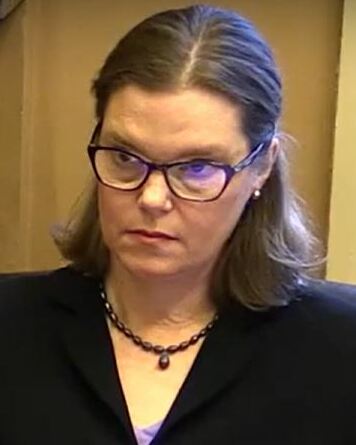

Ruth Hardy is a Democratic member of the Vermont Senate, and her member profile describes her Senate service. Her AI record in the sources used here is one bill, S.205, which would pause defined AI data centers until July 1, 2030.
Hardy is one of four additional sponsors, and Senator White is listed as the sponsor. The bill received its first reading and was referred to the Senate Finance committee on January 6, 2026, and the sources show no roll call or enactment after that referral.
- Party
- Democratic
- State
- Vermont
- Office
- Vermont State Senator
- Age
- No verified birth date or dated age found.
- Political Leaning
- Not established beyond party affiliation.
- Election Status
- Her S.205 sponsorship is verified at the bill's January 6, 2026 first reading. No source used here confirms a November 3, 2026 election result or certification for her.
Ruth Hardy's Position on AI
Ruth Hardy is an additional sponsor of S.205, a bill that would bar anyone from operating a defined AI data center, or beginning site preparation or construction on one, before July 1, 2030. The Vermont Legislature's status page lists Senator White as the sponsor and names Hardy with Senators Bongartz, Major and Vyhovsky as additional sponsors.
Her role is additional sponsorship. The record does not credit her as lead sponsor or with any vote on the bill.
The sources used here include no personal statement from Hardy about AI, so her position on AI can be read only from the bill she is listed on.
Ruth Hardy's Background
Ruth Hardy earned a bachelor's degree in government from Oberlin and a master's degree in public affairs from the LBJ School at the University of Texas at Austin. Her biography, which reflects the 2023 to 2024 session, says she was raised near Ithaca in rural New York, where her mother taught and her father worked in state government.
Her biography says she worked as a fiscal analyst for the Wisconsin legislature covering education, then moved to East Middlebury, Vermont, in 2002.
The biography also says she served three school-board terms and chaired the Middlebury ID#4 Mary Hogan School Board before district unification. It says she is a graduate of the Snelling Center's Vermont Leadership Institute and teaches public policy and politics at Middlebury, and that she substitute-teaches middle school. It says her Senate service began in 2019.
- Director of the Open Door Clinic.
- Assistant budget director at Middlebury College.
- Government-grants director for Planned Parenthood of Northern New England.
- Executive director of Emerge Vermont.
Ruth Hardy's AI Policy Record
The only AI-related instrument in the sources used here is S.205, which would impose a temporary moratorium and direct a study of AI data centers. Hardy's listed role is additional sponsor. The sources show no roll-call vote by her, no endorsement statement and no executive direction on the bill.
The bill text bars anyone from operating an AI data center in Vermont, or beginning site preparation for or construction of one, before July 1, 2030. Its stated purpose is to give regulators time to study and develop a regulatory regime that best serves the general good.
The bill defines an AI data center as a facility that requires greater than 100 megawatts of new load dedicated to AI inference, training, simulation or synthetic data generation. A facility below that level, or one whose new load is not dedicated to those uses, falls outside that definition as written.
The Public Utility Commission, with input from the Department of Public Service and all other interested parties, would open an investigation into AI data centers in Vermont. By January 15, 2027, the commission would report findings and recommendations to the House committees on Energy and Digital Infrastructure and on Environment, and to the Senate committees on Finance and on Natural Resources and Energy.
The commission would have to consider the ten matters listed below. The bill defines a ratepayer as a member of any electric ratepayer class in Vermont, but not an AI data center. The cost-allocation item aims to hold other electric ratepayers harmless.
- The increased energy load needed to power an AI data center.
- Water consumption needed to cool computing equipment in an AI data center.
- Environmental impacts on water quality and availability, air quality, local ecosystems, noise, and land for farming, conservation, recreation and housing.
- Strategies for keeping the power grid reliable and secure.
- Strategies for energy efficiency and renewable energy consistent with Vermont's climate goals.
- A cost-allocation model that holds all other electric ratepayers harmless from the added demand, including grid upgrade costs.
- Positive and negative effects on the Vermont economy, including workforce opportunities, local businesses and economic growth.
- Environmental justice, particularly the location of an AI data center.
- Local and state permitting requirements that would minimize adverse effects.
- Any other matters the commission considers relevant.
| Date | Instrument | Hardy's role | Policy effect | Status |
|---|---|---|---|---|
| January 6, 2026 | S.205, AI data center moratorium and report | Additional sponsor | Would bar operating, site preparation or construction of defined AI data centers before July 1, 2030 | Introduced; first reading and referral to Senate Finance; no roll call or enactment shown |
| January 15 and February 2026 | Senate Finance sessions on AI data centers | Not shown for Hardy | Committee introduction on January 15, then February sessions on the subject | Status page lists the sessions; Hardy's attendance is not shown |
| January 15, 2027 | Public Utility Commission report under S.205 | Not applicable | Findings and recommendations to four legislative committees | Future deadline in the introduced text |
Limits of Ruth Hardy's AI Opposition
The record supports a narrow reading. S.205 covers facilities that meet the 100 megawatt definition, and it does not cover AI use in general. The sources show no personal statement from Hardy supporting or opposing AI more broadly.
The text lists no exemption from the pause, so a facility inside the definition would fall under it as written. It also contains no clause that ends the pause when the commission reports, and the pause runs to July 1, 2030 on its own terms.
The text requires the commission to consider both positive and negative economic effects. No report under the bill appears in the sources used here. Hardy's other AI votes or statements are not in these sources, so no claim is made about them.
Ruth Hardy's Office and Election Status
The S.205 status page lists Hardy among the Senate sponsors, and her member profile describes her Senate service. The profile does not by itself confirm her 2026 term.
No source used here confirms a result for Hardy in the November 3, 2026 general election, and she is not described as newly elected.
Her birth date and current age are not published in the sources used here, so neither is given.
Reading Ruth Hardy's AI Record
On the sources used here, Hardy's AI record is her additional sponsorship of S.205 as introduced, with the last recorded action being referral to the Senate Finance committee.
The conclusion would change if a recorded vote, final enactment, a revised version of the operative text or a statement from Hardy enters the record. No recommendation is made on how Hardy or any legislator should vote on the bill.
To track whether the bill moves, follow Ruth Hardy's S.205 record on the Vermont Legislature's status page.
Frequently Asked Questions
Did Ruth Hardy vote for the AI data center moratorium?
No vote by Hardy on S.205 appears in the sources used here, so a vote is not established. The record shows her as an additional sponsor, and the last recorded action is first reading and referral to Senate Finance on January 6, 2026.
Has S.205 become law?
No enactment appears in the sources used here. S.205 is an introduced bill, and under its effective-date section it would take effect on passage.
What counts as an AI data center under S.205?
The bill defines an AI data center as a facility that requires greater than 100 megawatts of new load dedicated to AI inference, training, simulation or synthetic data generation.
Facilities below that threshold, or whose new load is not dedicated to those uses, fall outside that definition as written.
When would the Public Utility Commission report on AI data centers?
Under the bill as introduced, the commission would report findings and recommendations on or before January 15, 2027. The report would go to four legislative committees: two House committees and two Senate committees.
Does the record show Ruth Hardy's age?
No. The sources used here do not publish her birth date or current age, so this page gives neither.