Stephen Lynch's Record on AI
Cosponsorship of a superintelligence ban and House votes on two AI bills
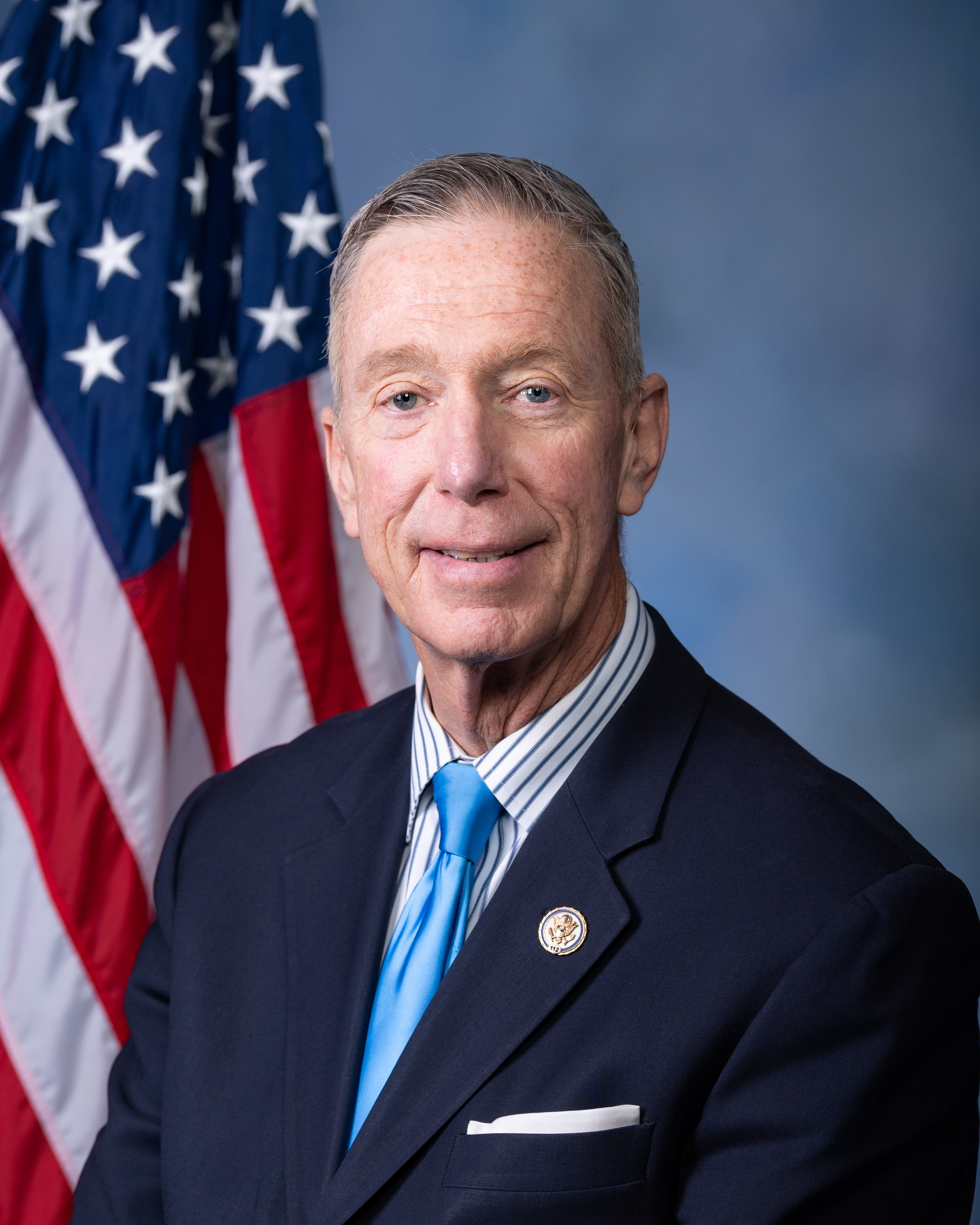

Stephen Lynch formally supports a conditional pause on advanced artificial intelligence and a ban on superintelligence. He is an original cosponsor of H.R. 10538, the Ban Artificial Superintelligence Act of 2026, and that bill has not been enacted.
His record also includes House votes for two AI bills: the TAKE IT DOWN Act, which became law, and the AI for Main Street Act, which passed the House. Those votes do not show blanket opposition to AI. The two individual House votes in the reviewed sources are both yeas.
- Party
- Democratic
- State
- Massachusetts
- Office
- U.S. Representative, Massachusetts 8th District (Democratic)
- Age
- 71 as of 2026-11-05 · Source
- Political Leaning
- Not established beyond party affiliation.
- Election Status
- AP call reported by a PrimaryDemocrats result tracker on November 3, 2026; the original AP results page was not directly readable, and no certification is recorded. Office in the February 20, 2026 Congressional Directory: U.S. Representative, Massachusetts 8th District.
Stephen Lynch's Position on AI
Lynch's AI record pairs formal support for restricting advanced AI with House votes for two AI bills that do not restrict AI broadly. The restriction is H.R. 10538, and the official status record lists Lynch as an original cosponsor as of September 24, 2026. That bill would pause advanced-AI training and deployment until a cabinet-level Department of Artificial Intelligence is staffed and safety rules are issued, and it would prohibit developing or deploying superintelligence.
Lynch voted yea on the AI for Main Street Act on January 20, 2026, and on the TAKE IT DOWN Act on April 28, 2025. The first would help small businesses evaluate and use AI, and the second restricts knowingly publishing specified nonconsensual intimate images, including certain AI-made forgeries. Neither vote shows support for every AI use, and the sources reviewed do not show opposition to AI in general.
The status of each item matters. The TAKE IT DOWN Act became Public Law 119-12, while H.R. 10538 and the Stop AI Price Gouging and Wage Fixing Act of 2025 have only referral or cosponsor status in the records reviewed. The AI for Main Street Act passed the House, and the Senate record shows it was received and referred.
Background at a Glance
Lynch is a Democrat who represents Massachusetts's 8th District in the U.S. House, according to the February 20, 2026 Congressional Directory. The table lists his identity, office, age, education and prior elected service as the official records give them.
| Item | Detail |
|---|---|
| Name | Stephen Lynch |
| Party | Democratic |
| Current office | U.S. Representative, Massachusetts 8th District |
| Born | March 31, 1955, South Boston, Massachusetts |
| Age | 71 as of November 4, 2026, calculated from the birth date |
| Political leaning | No finer label assigned in the sources; not inferred from party |
| Education | Bachelor's in construction management, Wentworth Institute of Technology, 1988; J.D., Boston College Law School, 1991; master's in public administration, Harvard Kennedy School (year discussed below) |
| Prior elected service | Massachusetts House of Representatives, 1995 to 1996; Massachusetts State Senate, 1997 to 2001 |
| 2026 election status | AP call reported November 3, 2026; no certification recorded |
Background and Political Leaning
Lynch grew up in South Boston public housing, according to his official congressional biography. His father was an ironworker and his mother was a postal clerk. He worked as a structural ironworker for 18 years, and the directory dates his presidency of Ironworkers Local #7 from 1988 to 1991. He later worked as a labor and employment attorney.
The directory lists a bachelor's degree in construction management from Wentworth Institute of Technology in 1988 and a J.D. from Boston College Law School in 1991. It also lists a master's in public administration from Harvard Kennedy School. The directory dates that degree to 1998 and the official biography to 1999, so this profile gives no year for it.
Lynch served in the Massachusetts House of Representatives from 1995 to 1996 and in the Massachusetts State Senate from 1997 to 2001. The directory lists his party as Democratic, and the sources reviewed assign no finer ideological label. Party alone does not establish a finer ideology, so none is stated here.
Statements and Actions on AI
A January 12, 2024 press release announced that Lynch was named lead Democrat on a new bipartisan working group on artificial intelligence. Lynch is quoted in the release as referring to "advancing responsible A.I. innovation," and the release ties robust federal oversight to that goal along with consumer safety, privacy, financial equity and financial stability. His office described the group's remit as examining both benefits and risks, including financial crime detection, risk analysis, customer service and consumer lending.
On June 24, 2024, Lynch hosted bipartisan Financial Services members at MIT for an artificial intelligence working group visit, and his office reported it on June 25. The office's release says the visit examined benefits, risks, accurate source data and AI's effects on the workforce. Lynch is quoted as saying: "how we can better use it to the advantage and protection of the American people."
On August 10, 2026, Representative Casar issued press releases seeking information from OpenAI and from Anthropic about reported model security incidents. Both releases list Lynch among the members seeking logs and answers. Joint requests do not show that Lynch wrote the demands or verified the technical claims in them.
The sources reviewed contain no individually spoken statement by Lynch on superintelligence or a conditional pause. His position on those subjects therefore rests on his cosponsorship of H.R. 10538, which is a formal record and not a quotation.
Policies Supported and Opposed
Lynch's formal record supports one proposed restriction on advanced AI and includes House votes for two AI bills, one enacted and one passed by the House. The sources reviewed show no AI bill that Lynch opposed, by vote or by cosponsorship. The table lists each dated item with its status.
H.R. 10538 would create a cabinet-level Department of Artificial Intelligence. Advanced-AI training, modification, fine-tuning and unreleased deployment would pause until that department is staffed and safety rules are issued, with limited remedial work excepted. The bill defines advanced AI from training compute of 10^25 integer or floating-point operations, adjusted annually, and defines superintelligence as systems with broadly superhuman cognition or the capacity to destroy or disempower humanity.
The bill would bar developing, deploying, possessing, funding, importing or transferring superintelligence, and advanced models would need predeployment approval. Dangerous systems would have to be paused and isolated, and could be rendered inoperative. Enforcement adds 24-hour discovery reporting, developer charters and penalties of up to 20 years in prison for specified reckless violations.
The bill also protects whistleblowers, pursues international agreements against superintelligence and restricts federal funding for prohibited activities. A discretionary waiver in Section 13(c)(3) lets the Secretary waive the 10-year AI-industry employment bar for a non-policymaking person who reported a violation. That waiver is not automatic immunity from every penalty.
The TAKE IT DOWN Act addresses knowing publication of nonconsensual intimate depictions, including specified digital forgeries made with AI or other software, subject to the law's conditions and exceptions. Covered platforms must have a notice and removal process within one year of enactment and remove covered depictions within 48 hours of a valid request. It is a harm-specific restriction, not legislation banning AI or synthetic media, and the Senate passed it by unanimous consent on February 13, 2025, so that Senate passage has no individual roll call.
The AI for Main Street Act, as passed by the House, would require small business development centers to help businesses evaluate and use AI. Its guidance and training would cover best practices, data and intellectual property, cybersecurity and regulatory compliance, and the text authorizes no additional funding. A yea vote supports the bill as passed, but the vote record does not give a reason for it.
| Date | Item | Lynch's role | Status in reviewed sources |
|---|---|---|---|
| Jan. 12, 2024 | Bipartisan AI working group | Named lead Democrat | 2024 remit described; 2026 status not established |
| Apr. 28, 2025 | TAKE IT DOWN Act (S. 146) | Yea on House suspend-the-rules vote, roll call 104 | Passed House 409 to 2; became Public Law 119-12 on May 19, 2025 |
| Aug. 8, 2025 | Stop AI Price Gouging and Wage Fixing Act of 2025 (H.R. 4640) | Cosponsor | Latest recorded action is a July 23, 2025 referral; no passage recorded |
| Jan. 20, 2026 | AI for Main Street Act (H.R. 5764) | Yea on House suspend-the-rules vote, roll call 33 | Passed House 395 to 14; received in Senate January 26, 2026 and referred; no law entry |
| Sept. 24, 2026 | Ban Artificial Superintelligence Act of 2026 (H.R. 10538) | Original cosponsor | Referred to House Committee on Oversight and Government Reform; no enactment recorded |
Current Office and the 2026 Election
A PrimaryDemocrats result tracker reports an Associated Press call dated November 3, 2026, for Lynch's race. The tracker links an original AP results page, but its race data could not be read directly, so the call rests on the tracker's report. No certification is recorded in the sources reviewed.
The office record used here is the February 20, 2026 Congressional Directory, which lists Lynch as U.S. Representative for District 8. That directory predates the November 2026 election, so it confirms the office he held in February and says nothing about the result. For the reported result itself, check the PrimaryDemocrats Massachusetts page, which is a secondary source.
Scope and Open Questions
The supported restriction is specific: a proposed conditional pause on advanced-AI training and deployment, plus a proposed superintelligence ban, both in H.R. 10538. Neither has been enacted in the sources reviewed, and the pause would last only until the proposed department is staffed and safety rules are issued.
Several facts remain open. The sources do not show whether H.R. 10538 moves past its September 24, 2026 referral. The text of H.R. 4640 is also not described here, because the status record gives only its title, cosponsor role and referral.
The sources also do not show whether the 2024 working-group appointment still applies in 2026. They cover only two House votes, so Lynch's full roll-call history on AI is not covered. The 2026 race result is also not confirmed by an official source, pending a readable AP results page and certification.
Nothing reviewed shows that Lynch opposes AI in general. A missing vote or cosponsorship is an unknown, not evidence of a position in either direction.
Open the GovInfo status record for H.R. 10538 and compare its latest action date with September 24, 2026, to confirm whether the bill has moved.
Frequently Asked Questions
Does Stephen Lynch oppose AI in general?
No. The sources reviewed show support for a proposed conditional pause on advanced AI and a superintelligence ban, along with House votes for two AI bills. Those positions are specific, so they do not establish a position on every AI use.
Has the superintelligence ban become law?
No. H.R. 10538 was referred to the House Committee on Oversight and Government Reform on September 24, 2026, and the sources reviewed record no enactment.
The sources reviewed do not show either for this bill.
Does a cosponsorship count as a vote?
No. A cosponsorship is a formal record of support for a bill, and it is not a roll-call vote. Lynch's cosponsorships of H.R. 10538 and H.R. 4640 do not show what he said about either bill.