Tanya Vyhovsky's Record on AI
An introduced Vermont bill to pause defined AI data centers until July 1, 2030
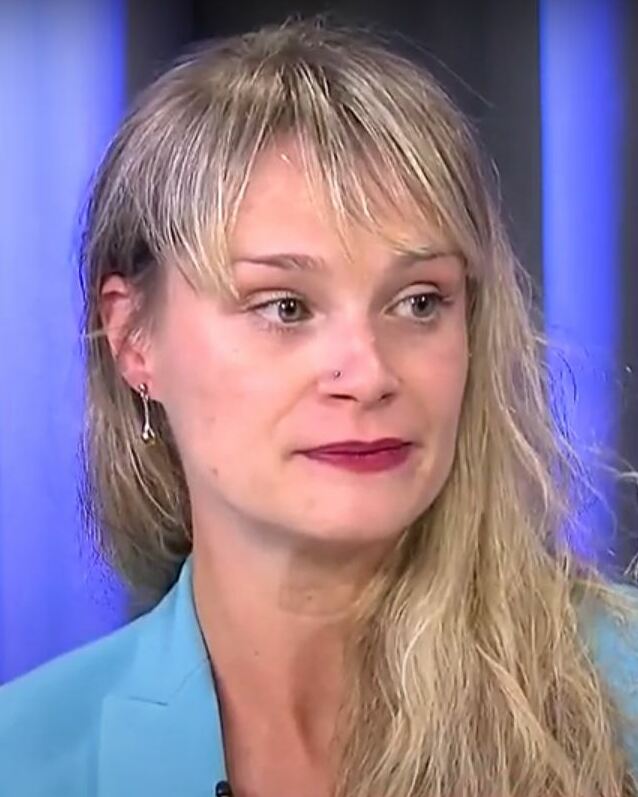

Tanya Vyhovsky is a Vermont state senator, and her party is listed as Progressive / Democratic. She is one of five senators who introduced S.205, a bill that would bar operating, site preparation or construction of defined AI data centers in Vermont before July 1, 2030.
The bill has been introduced and has not been enacted. The official status record shows a first reading and referral to Senate Finance on January 6, 2026, with no floor roll call.
- Party
- Progressive / Democratic
- State
- Vermont
- Office
- State senator, Vermont
- Age
- No verified birth date or dated age found.
- Political Leaning
- Not established beyond party affiliation.
- Election Status
- Current office: Vermont state senator, shown in the 2026 bill action. The November 3, 2026 election result is not verified here, and no reported call, certification or new term is established.
Tanya Vyhovsky's Position on AI
The AI policy action documented for Vyhovsky is her role as an additional sponsor of S.205. The official status record names Senator White as the sponsor and lists Vyhovsky with Senators Bongartz, Hardy and Major as additional sponsors.
The bill text lists all five senators as introducers. It regulates only AI data centers, so the proposal does not reach other AI uses.
The study the bill requires must weigh economic effects in both directions. The Public Utility Commission would consider the positive and negative impact of an AI data center on the Vermont economy, particularly workforce opportunities, local businesses and economic growth generally.
The study also covers grid reliability, water use for cooling, noise, and the availability of land for farming, conservation, recreation and housing. It asks for a cost-allocation model that would hold all other electric ratepayers harmless from the added demand and any associated grid-upgrade costs.
The text also asks the Commission to consider environmental justice initiatives, particularly where a facility is located, and the local and State permitting requirements that would minimize adverse effects.
Tanya Vyhovsky's Background
Her legislature profile lists a 2003 Essex High School graduation, a 2009 psychology and biology bachelor's from Northeastern University, and a 2017 social-work master's from the University of Vermont (UVM).
The profile lists her as a licensed clinical social worker with an Essex private practice for youth and young adults, and as a UVM graduate social-welfare policy instructor.
She is credited with developing the Vermont Support Line with the state mental-health department, which she directed from 2013 to 2015, and with board and legislative leadership at a Vermont social-workers association from 2016 to 2020.
Other roles include founding Essex Area Mutual Aid during the pandemic, movement-politics committee leadership at Rights and Democracy Vermont since 2018, and a health-care campaign organized with the Vermont Workers Center.
She served in the Vermont House from 2021 to 2023 and the Senate from 2023. These entries date from the 2023 to 2024 profile; current employment and committees are not established here.
Tanya Vyhovsky's AI Policy Record
S.205 is the only AI policy instrument documented for Vyhovsky. Its introduced text sets a pause on AI data centers that runs to July 1, 2030.
Under the introduced text, no person may operate an AI data center in Vermont, or begin site preparation for or construction of one, before July 1, 2030. The stated purpose is to give the appropriate regulatory entities time to develop a regulatory regime that best serves the general good.
The threshold is greater than 100 megawatts of new load dedicated to AI inference, training, simulation or synthetic data generation. A facility at exactly 100 megawatts does not meet the definition, and the text does not define new load further.
The text defines a ratepayer as a member of any electric ratepayer class in Vermont, excluding AI data centers. The cost-allocation model protects all other electric ratepayers from the data center's demand.
The record shows no aye vote, endorsement or other personal AI action by Vyhovsky beyond the S.205 sponsorship.
| Date | Instrument or action | Her role | Policy effect | Status |
|---|---|---|---|---|
| January 6, 2026 | S.205 first reading and referral | Additional sponsor and introducer | Pause on operation, site preparation and construction of defined AI data centers before July 1, 2030 | Introduced and referred to Senate Finance; no floor roll call or enactment shown |
| January 15, 2026 and February 2026 | Senate Finance Committee sessions on AI data centers | Individual participation not shown | None established by the record | Sessions held; no vote is listed in the record |
| January 15, 2027 | Public Utility Commission report deadline | Not a personal role | Findings and recommendations to four legislative committees | Future deadline in the introduced text |
| Not dated | Other AI votes, endorsements or executive direction | None shown | None established | Not documented in the official record |
Limits of Tanya Vyhovsky's AI Opposition
The record establishes one narrow policy action. It does not establish a broader position on AI, and it shows no personal statement, speech, endorsement or vote on AI benefits or on whether AI data centers should be built.
It prohibits three activities before July 1, 2030, and its stated purpose is study. It makes no finding about whether AI data centers help or harm Vermont.
- The introduced text has no separate exemption section for particular facilities or uses.
- The 100 megawatt threshold counts only new load, and the text does not explain how new load is measured.
- The pause is described as temporary and runs to July 1, 2030.
- The bill takes effect on passage, and the record shows no enactment.
- The economic study weighs positive and negative effects, and the text states no net cost or net benefit finding.
Tanya Vyhovsky's Office and Election Status
Her current office is state senator, as shown in the 2026 bill action.
The outcome of the November 3, 2026 election is not verified here. The record shows no reported call or certification for her, so the 2026 bill action does not by itself establish a new term.
The record does not include a verified birth date, so her current age is not published.
Reading Tanya Vyhovsky's AI Record
Tanya Vyhovsky is an additional sponsor of S.205, an introduced Vermont bill that would pause defined AI data centers until July 1, 2030 while Vermont studies ratepayer, environmental and economic effects through the Public Utility Commission.
The documented record is one introduced bill. It shows no recorded floor vote, no enactment and no endorsement of other AI measures by Vyhovsky.
This reading would change with a new recorded vote, final enactment, a revised operative provision or an individual statement on AI.
To see whether S.205 has moved since its January 2026 referral, read the bill status page.
Frequently Asked Questions
Has Vermont enacted the S.205 AI data center pause?
The official status record shows no enactment. S.205 is listed as introduced, with a first reading and referral to Senate Finance on January 6, 2026, and no floor roll call.
The bill's effective-date section says it takes effect on passage.
What would S.205 cover?
It covers an AI data center, defined as a facility that requires greater than 100 megawatts of new load dedicated to AI inference, training, simulation or synthetic data generation. Before July 1, 2030, no person may operate such a facility, begin site preparation for one, or begin its construction in Vermont.
Did Tanya Vyhovsky win the November 2026 election?
The outcome of the November 3, 2026 election is not verified on this page. Her 2026 bill action shows the Senate office she held at that time, but it does not establish a new term or certification.