Todd Gloria's Record on Artificial Intelligence
Executive Order 2026-2 directs city staff to prepare data-center rules and a proposed moratorium.
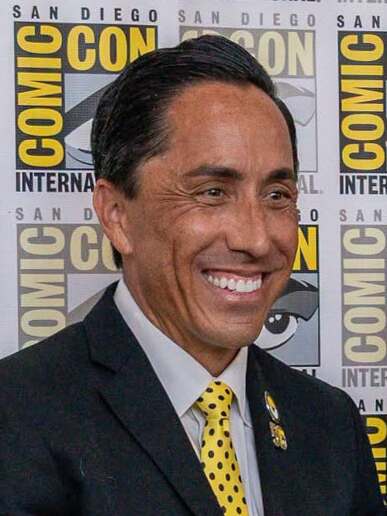

The City of San Diego has no comprehensive local framework for data centers, according to Mayor Todd Gloria's Executive Order 2026-2, which he signed on October 22, 2026. The order says the growth of artificial intelligence (AI) requires large physical infrastructure, including data centers.
The order does not enact a moratorium itself. The City Council would have to act on the proposed ordinance.
- Party
- Democratic; nonpartisan mayoral office
- State
- California
- Office
- San Diego mayor
- Age
- No verified birth date or dated age found.
- Political Leaning
- Not established beyond party affiliation.
- Election Status
- Current office: San Diego mayor, as shown by the October 22, 2026 executive order that Gloria signed as mayor. The record does not establish a November 3, 2026 election result for Gloria.
Todd Gloria's Position on AI
Mayor Todd Gloria's Executive Order 2026-2 orders city staff to prepare data-center rules and a proposed temporary moratorium. The order also states that the city does not aim to block AI innovation.
The order says the city's objective "is not to prevent artificial intelligence innovation or responsible investment." It adds that responsible regulation "does not require San Diego to reject artificial intelligence innovation or technological investment."
The order does not impose the moratorium itself. It directs the Planning Department to bring an interim ordinance to the City Council, and the Council decides whether to adopt it.
The order's recitals give its reasons. San Diego's water supply is constrained, data centers can need substantial water for cooling, and the city faces an acute housing shortage.
The order says the city should set clear standards for land use, housing, electricity, water, infrastructure and the environment before rapid data-center development proceeds.
The order takes effect at 11:59 p.m. on October 22, 2026. It requires preliminary recommendations within 180 days of that date, and counting 180 days from October 22, 2026 lands on April 20, 2027.
Background and Public Service
The biography says Gloria is a third-generation San Diegan whose parents worked as a hotel maid and gardener.
The biography describes him as a University of San Diego graduate and an enrolled member of the Central Council of the Tlingit and Haida Indian Tribes of Alaska. He began public service at the San Diego County Health and Human Services Agency, then served as Congresswoman Susan Davis's district director.
He was elected to City Council District 3 in 2008, became Council president in 2012 and interim mayor in 2013. He was elected to the Assembly's District 78 seat in 2016 and served as Majority Whip.
He was elected mayor in 2020 and reelected in 2024. The biography calls him the first person of color and an openly LGBTQ person (a term for lesbian, gay, bisexual, transgender and queer people) elected to that office.
The biography also lists him as U.S. Conference of Mayors president for 2026 to 2027, following service as vice president.
The AI Policy Record in Executive Order 2026-2
Executive Order 2026-2 directs city staff to prepare data-center rules and a proposed interim moratorium ordinance, and the City Council decides permanent rules.
Gloria's role on the order is as its signer. The Council is the body that would vote on the interim ordinance and the permanent rules.
The order describes a voting threshold for the interim ordinance. Under California Government Code section 65858, as the order cites it, an interim ordinance adopted as an urgency measure requires a four-fifths Council vote and specified findings of a current and immediate threat to public health, safety or welfare.
The order does not say whether the proposed ordinance will be adopted as an urgency measure, so the four-fifths threshold applies only if the Council takes that path.
| Instrument | Date or deadline | Gloria's role | Policy effect | Status in record |
|---|---|---|---|---|
| Executive Order 2026-2 | Dated October 22, 2026; effective 11:59 p.m. that day | Signed by Gloria as mayor | Directs Planning to bring a proposed interim moratorium ordinance to the Council | In effect; does not itself enact a moratorium |
| Proposed interim moratorium ordinance | The mayor's press release states October 26, 2026 as the Council date | Proposed under the order; Planning brings it forward | Would set a temporary moratorium on applicable data-center development | Proposed; no Council vote established |
| Data Center Stakeholder Working Group | Directed by the order; dissolves when preliminary recommendations are submitted | Mayor appoints up to 15 members | Advises on siting, demand, grid, noise and environmental standards | Temporary; membership not identified in the record |
| Preliminary recommendations | Due within 180 days of October 22, 2026 | Mayor's office and Council receive them; Planning and Development Services prepare them | Preliminary recommendations on data-center regulation | Deadline set by the order; delivery status not in the record |
| Permanent data-center regulations | Process starts within 180 days after preliminary recommendations are released | Executive direction only; the Council decides adoption | Public notice, hearings, Planning Commission recommendation, then Council consideration | Triggered within 180 days after preliminary recommendations; start status not in the record |
Limits of the Record on Gloria's AI Views
The order's stated goal is a framework that lets innovation and economic opportunity continue while data centers are planned and their impacts do not fall disproportionately on ordinary San Diegans.
The order does not list which data-center projects the proposed moratorium would cover. It refers to "applicable" and "certain" data-center development, so the scope depends on ordinance text the record does not contain.
The order defines a data center by purpose: a facility housing computing infrastructure mainly for processing, storing or distributing electronic data.
Office and Election Status
Gloria was San Diego's mayor when he signed the order on October 22, 2026.
The official biography says voters elected him mayor in 2020 and reelected him in 2024.
KPBS identified Gloria as a Democrat in an October 7, 2024 candidate guide. San Diego's mayoral ballot is nonpartisan, and the record establishes no ideology label beyond that party identification.
Reading the Record on Gloria's AI Policy
Gloria ordered preparation of data-center rules and a proposed temporary moratorium; the order does not itself enact one.
This reading would change if the Council records a vote on the ordinance, if a final enactment appears, if the operative text is revised, or if Gloria makes a separate statement that changes the order's scope.
To confirm the deadlines and the operative wording, read the full text of Executive Order 2026-2, which sets the effective time and the 180-day schedules.